The Man Who Checked His Watch Twice
The first rule of a well-constructed life is that no one notices the seams. For a certain kind of man in Perth, the seams are everything: the minute hand on the oven timer, the exact distance between the garage door and the kitchen bench, the precise moment the afternoon sun hits the back fence and signals that another day is slipping toward its appointed end.
He had become an expert in seams.
On a Tuesday in late October, the West Australian reported a story that briefly captured the city’s attention: a plumber performing a citizen’s arrest on an alleged car thief in the northern suburbs, only for the handbrake to fail and send the ute rolling into a neighbour’s letterbox. The video went viral. People laughed, shared, forgot by Wednesday. But the man who read that article at his desk in the CBD didn’t laugh. He understood, perhaps too well, what it meant to execute a manoeuvre with perfect precision only to have the mechanism fail at the crucial moment.
His name is not important. What matters is the architecture of his life, which was built with the care of someone who knows that foundations are only as strong as the things you choose not to see.
The Morning Equation
He woke at 5:47 each morning, not because an alarm demanded it, but because his body had become a clock that counted time in responsibilities rather than hours. The shower was exactly nine and a half minutes. The coffee was made with a precision that bordered on ritualistic: seventeen grams of beans, water at ninety-three degrees, a thirty-second bloom. His wife drank tea. His daughter, aged seven, drank milk with a dash of honey, stirred counter-clockwise because she believed it made it taste sweeter.
He had once read a line in a Graham Greene novel—The End of the Affair, borrowed from a colleague and returned slightly late, a small delinquency he still remembered, about how the most dangerous secrets were the ones you kept from yourself. He had closed the book at that sentence, looked out the window at the grey Perth sky, and felt something shift in his chest. Then the moment passed. He returned the book, paid the overdue fine, and never mentioned it.
By 6:34, he was in the car. The drive from their house in Mount Lawley to his office in the city took exactly twenty-two minutes in good traffic. He knew every pothole, every traffic light sequence, every stretch of road where the bitumen had been patched and repatched until it resembled a scarred palm. He could have driven it blindfolded. Some mornings, he suspected he did.
The Hour Between
He was a forensic accountant, which is a profession that sounds more dramatic than it is. His days were spent in the margins of other people’s stories: tracing discrepancies, following paper trails, finding the place where the numbers stopped adding up. He was good at it. He had a gift for noticing what didn’t belong, the odd decimal, the missing receipt, the signature that was just slightly too smooth to be authentic.
His firm occupied the twelfth floor of a building on St Georges Terrace, and from his desk he could see the Swan River curving through the city like a question mark. He had a photograph on his desk: his wife and daughter at Cottesloe Beach, sand dusting their shoulders, the light hitting them at that particular angle that made the ordinary seem sacred. He looked at it several times a day. This was the first seam.
The second seam was the phone in his jacket pocket, set to silent, which he checked exactly three times per hour. Not compulsively. Precisely. Like a pilot scanning instruments, knowing that the smallest deviation could mean everything.
He had once told a colleague that he admired the craftsmanship of old buildings, the way stonemasons would hide their signatures in corners no one would ever see. The colleague had nodded and changed the subject. But the man who checked his watch twice meant it. He understood the impulse to leave a mark where only you would know to look for it.
The Afternoon Recalculation
Perth in October is a city of hard light and soft shadows. The Jacaranda trees along Mounts Bay Road were beginning to purple, and the jacaranda bloom is a particular kind of beauty: brief, almost indecent in its intensity, then gone. He noticed these things now, in a way he hadn’t for years. The texture of light on water. The weight of a stranger’s glance. The quality of silence at 2:17 PM when the office emptied for lunch and he was alone with the hum of the air conditioning and the feeling of being watched by no one.
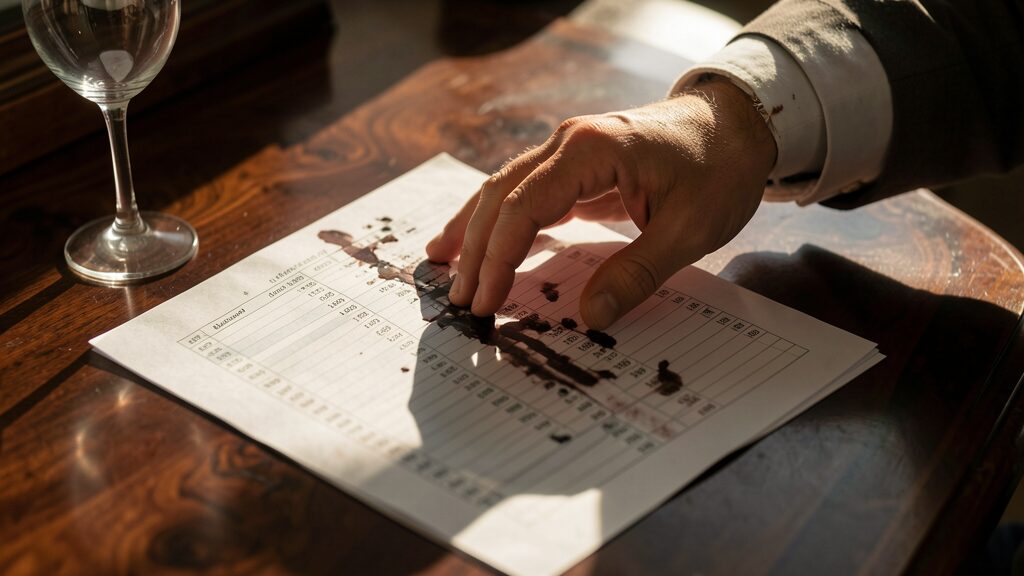
He had a meeting that afternoon with a client whose affairs had become tangled in ways that required delicacy. The client was a wine distributor whose partner had been siphoning funds into a separate account for three years. The numbers told a clear story. But the man who read the spreadsheets found himself thinking about the partner instead, about the careful construction of a secret life, the meticulous bookkeeping of betrayal. He wondered if the partner had ever looked at a photograph on their desk and felt the weight of two truths pressing against each other like tectonic plates.
He caught himself. This was the seam he was not supposed to see.
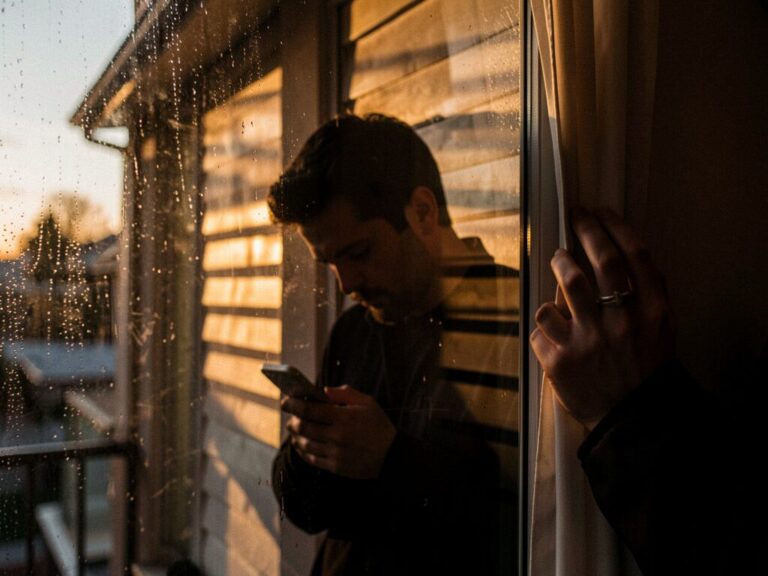
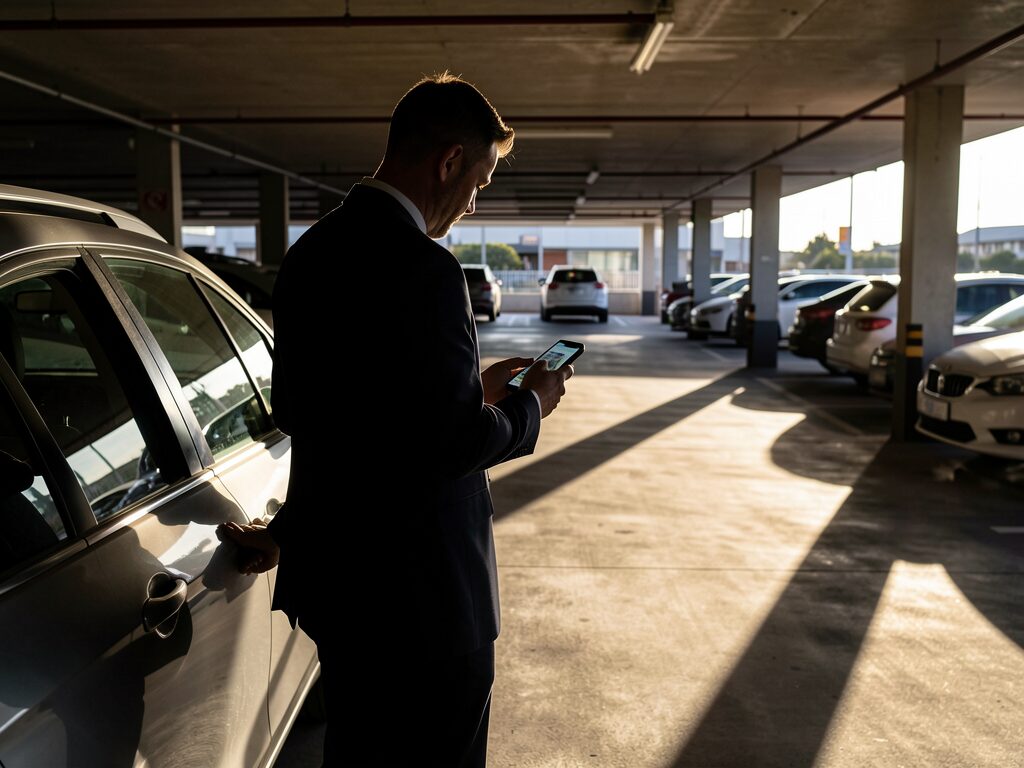
At 3:45, he excused himself to use the bathroom. In the mirror, a man in his mid-thirties looked back at him, slightly tired at the edges, a faint crease between his brows that had become permanent. He straightened his tie, a gesture he had repeated so many times it had lost all meaning. Then he took out his phone.
The message was three words.
He deleted it immediately. This was a seam he had become expert at hiding.
The Evening Reconstruction
The drive home took twenty-seven minutes that day, five minutes longer than usual, because of an accident on the Mitchell Freeway. A truck had jackknifed near the Graham Farmer Freeway interchange, and traffic was backed up past the WACA. He sat in the stillness of the stopped car, the radio murmuring news about a proposed redevelopment of Perth Airport’s T3 and T4 terminals, and thought about how strange it was that the city was planning futures while he was carefully dismantling his own.
He arrived home at 6:12, just as his daughter was setting the table. She placed the forks with the solemnity of a ritual, each tine aligned with the edge of the napkin. He kissed the top of her head. He asked his wife about her day, she was a speech pathologist, working with children who had trouble finding the words for the world around them. She told him about a boy who had finally said “ball” after six months of therapy. She was proud. He could see it in the way she held her shoulders.
He said all the right things. He helped with dinner. He read a bedtime story about a kangaroo who lost his pouch and found his way home by following the stars. He kissed his daughter goodnight, turned off the light, and stood in the hallway for a moment, the house dark around him, the only sound the low hum of the refrigerator and the distant crash of waves on a shore he could not see.
The third seam was this: he did not know which life was real.
The Geometry of After
There is a particular kind of loneliness that comes from being seen exactly as you have arranged yourself to be seen. The man who checked his watch twice had become a master of arrangement. The framed photograph, the uniform of pressed shirts, the morning ritual that looked like devotion but had become a script. He was the plumber executing the arrest with perfect technique, only to discover that the handbrake had failed before he even reached for it.
The West Australian article had stayed with him, not for the viral video or the handbrake blunder, but for the phrase the plumber used afterward: “I thought I had it.” The man who read those words at his desk had felt a recognition that surprised him. He thought he had it too. The architecture, the precision, the careful counting of minutes and hours and years. He thought he had built something that would hold.
But the seams were showing.
And the most dangerous truth, the one he could not afford to acknowledge, was that he did not want to repair them. He wanted to pull at the loose thread until the whole thing unraveled, until he could see what was underneath: not a husband, not a father, not a forensic accountant with a photograph on his desk and a dinner reservation for Saturday night. But a man who had spent so long being seen that he had forgotten what it felt like to be chosen.
He looked at his watch. It was 10:47 PM. His wife was asleep beside him, her breathing even and deep. His daughter’s door was closed. The house was quiet in the way that only a house full of sleeping people can be quiet: a held breath, a pause between sentences.
He did not reach for his phone. Not tonight.
But he did not fall asleep for a long time.
Meet discreet married men in Perth
Authentic profiles, guaranteed privacy, free access.