The Waiting Room on Greenville Avenue
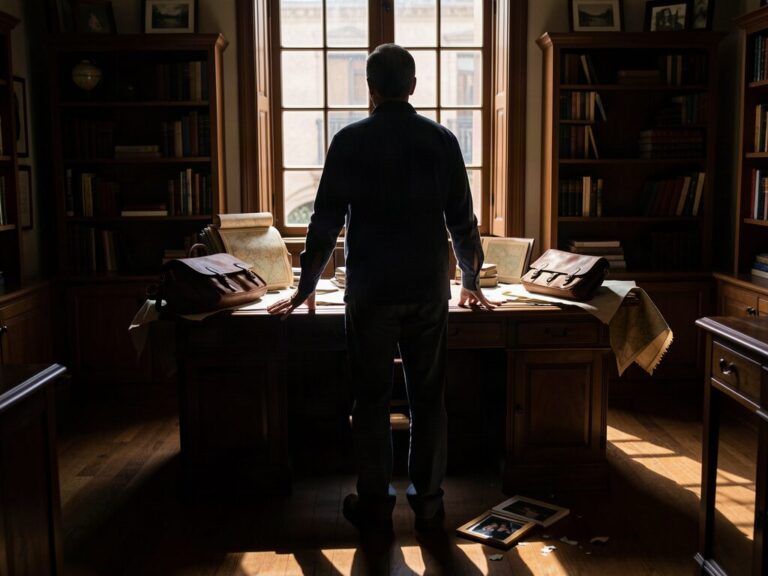
The jade plant on the windowsill of his office had been dying for three months now, a slow surrender to neglect that he noticed every morning but never addressed. It sat there like evidence. Like something he meant to water but kept forgetting, the same way he kept forgetting to replace the expired insurance card in his wallet, the same way he kept forgetting to call his mother back. The plant’s leaves were curling inward, turning the color of old bruises, and he told himself he would deal with it this weekend. He had been telling himself that since August.
It was a Tuesday in late October when the Dallas Morning News reported that a forty-three-year-old man had barricaded himself inside his Oak Lawn home, set the place on fire, and died before the SWAT team could breach the door. The story ran with a photograph of a modest bungalow completely swallowed by flames, the kind of house that looked ordinary and unassuming, the kind of house where neighbors said they never suspected anything. He seemed like a normal guy, one of them told the reporter. Quiet. Kept to himself. Raymond Chandler read the article twice, standing at his kitchen counter at six in the morning, the coffee growing cold in his hand. He didn’t know why it stuck with him. He didn’t know why he clipped the story out of the paper and slipped it into his briefcase, folded between the pages of a legal pad he never used.
The fire had been contained to one structure, the article said. No one else was harmed. The man had been alone.
Quarter Past the Lie
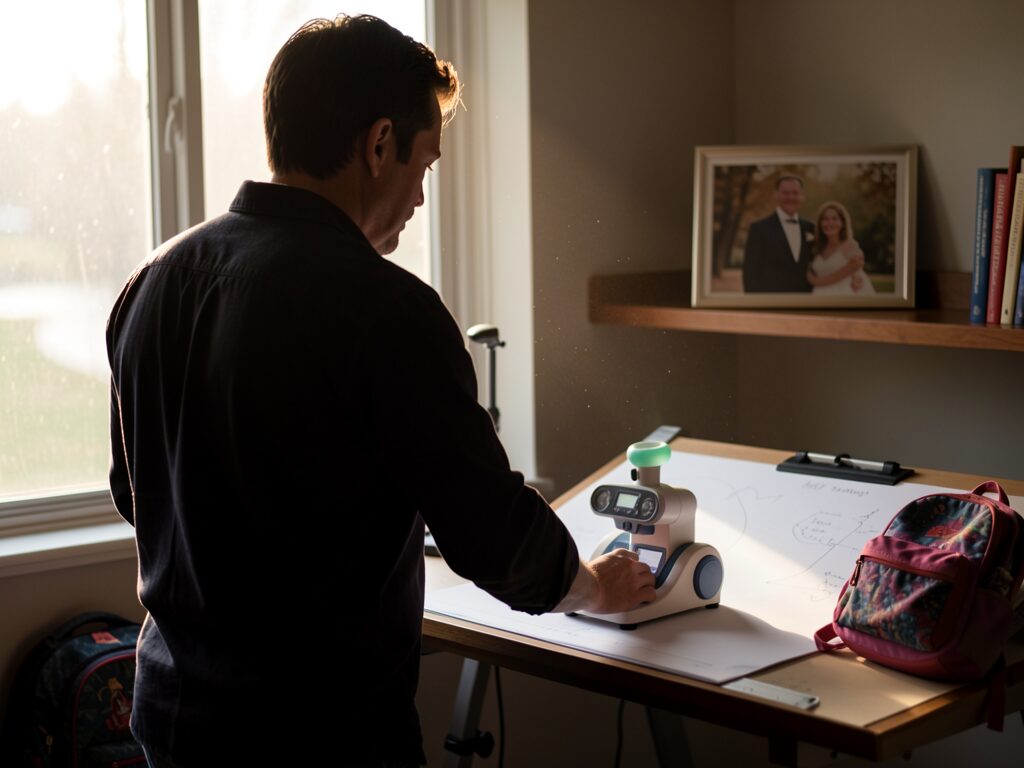
Raymond was an industrial designer specializing in children’s medical equipment, which meant he spent his days thinking about how to make things less frightening for small humans. He designed the ergonomic handles on portable oxygen tanks, the soft contours of pediatric MRI beds, the reassuringly rounded corners of hospital cribs. His seventeen years in the field had earned him a reputation for meticulousness, for a kind of obsessive attention to detail that bordered on compulsion. His colleagues said he had a gift. His wife said he was the most reliable person she had ever met.
His wife’s name was Patricia. She taught high school chemistry at Booker T. Washington, and she had a laugh that sounded like something breaking and then being put back together in a better way. They had been married for fourteen years, after a three-year courtship that had felt like the only thing in his life that ever made perfect sense. Their son, Zachary, was eleven years old and had recently developed an obsession with the Dallas Stars, a fixation that Raymond found both endearing and baffling. Zachary could recite Jason Robertson’s stats from memory. He knew the details of the contract dispute that had dragged through the summer, and he had explained it all to his father at least four times, as if the nuances of NHL salary arbitration were something a man needed to understand to be a good parent.
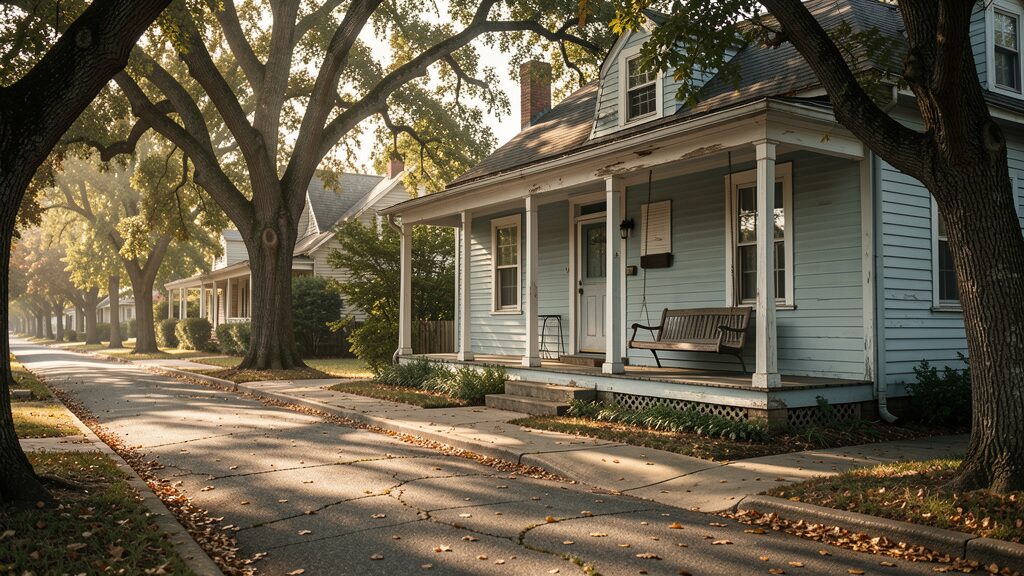
Raymond loved his son. He loved his wife. He loved the life they had built in the shaded corner of East Dallas where the streets were lined with old oak trees and the houses were painted colors that looked good in photographs. He loved his job, or at least he admired it. He was not unhappy. That was the thing he kept circling back to, the thing he turned over in his mind like a worry stone. He was not unhappy. He was not dissatisfied. He was not looking for anything.
And yet.
The Deep Ellum Garage
There was a parking garage on Elm Street in Deep Ellum, six stories of concrete and fluorescent light, where Raymond had started stopping on his way home from work. Not every day. Twice a week, maybe. Three times. He would pull his gray Honda Civic into a spot on the fourth level, turn off the engine, and sit. The garage smelled like exhaust and wet asphalt and something metallic he couldn’t name. He would sit there for fifteen minutes, sometimes twenty, watching the headlights of other cars sweep across the concrete pillars, watching people walk to their vehicles with their shoulders hunched against the weight of their own lives.
He told Patricia he was staying late at the office. He told her he had meetings with the pediatric specialists at Children’s Health. He told her traffic was worse than usual, which was technically true. The garage on Elm Street was not out of his way. It was exactly on his way. He had calculated the detour carefully, the way he calculated the precise curvature of a hospital bed rail, the way he calculated the risk tolerance of a piece of equipment designed to fail safely.
The garage had become a kind of ritual, a liminal space between the man he was and the man he was becoming. He would sit in the Civic with the engine off and the windows up, and he would think about nothing. He would let his mind go blank in the way he had read about in meditation guides, though he had never actually tried to meditate. The blankness was easier here, in the half-light of the garage, than it was anywhere else in his life. He could feel the minutes passing. He could feel himself suspended between two versions of the same story.
The story had started at a conference in Austin, eighteen months ago, when a woman in the hospitality industry had laughed at something he said about the ergonomics of hotel shower heads, and he had laughed back, and the laughter had felt like a door opening. He had not walked through that door. He had stood in the doorway, feeling the draft, feeling the possibility of a different kind of air. They had exchanged numbers for professional reasons. They had exchanged texts for reasons that were not professional. They had met for coffee twice, in the kind of coffee shop that played vinyl records and served oat milk lattes to people who looked like they had never been unhappy in their lives.
Nothing had happened. That was the other thing he kept circling. Nothing had happened, and yet everything had already happened. The wanting had happened. The imagining had happened. The small betrayals of omission had happened, stacking up like the unread emails in his inbox, piling higher and higher until the weight of them became a kind of gravity.
Something About the Stars
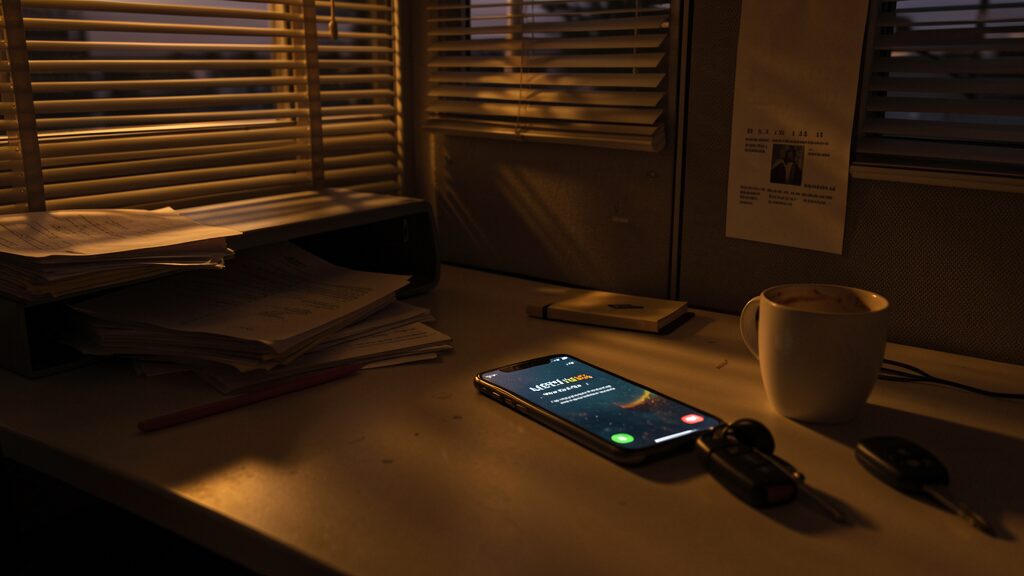
Zachary had a game that night. It wasn’t a real game, he was still too young for the competitive leagues, still in the developmental program where the children wore oversized jerseys and chased the puck with the uncoordinated joy of baby animals. But Raymond had promised to be there. He had promised this three times, and Patricia had reminded him twice, and he had set a reminder on his phone that had buzzed at him for the last hour like an accusation.
He was supposed to leave the office by five. He left at five fifteen. He drove toward the rink in Richardson, the one off Central Expressway where the parking lot was always full and the air inside smelled like Zamboni exhaust and frozen desperation. The parents sat on hard plastic bleachers, clutching paper cups of bad coffee, their faces lit by the harsh fluorescent lights of the ice. Raymond found a seat near the top row, away from the clusters of mothers who whispered to each other about school districts and summer camps. He watched his son skate in wide, uncertain circles, and he felt something crack open in his chest.
After the game, Zachary wanted chicken tenders from the place on Greenville Avenue, the one with the neon sign that flickered and the booths that were sticky in ways that seemed permanent. Raymond sat across from his son and watched him eat, watched the way the boy dipped each tender into a puddle of ranch dressing with surgical precision, and he thought about how much he loved this child. How much he loved this life. How much he had to lose.
The Dallas Stars had finally signed Jason Robertson to a one-year deal that morning, ending the contract dispute that had dominated the local sports pages for weeks. Zachary had heard about it on the radio in the car and had erupted in a stream of statistics and predictions that Raymond only half understood. He’s going to score forty goals this year, Zachary said, his mouth full of chicken. Maybe fifty. Raymond had nodded and said something encouraging, but what he was thinking about was the man in the Oak Lawn bungalow, the one who had barricaded himself inside and set his own house on fire.
He kept thinking about the line from the article, the one from the neighbor who said the man had seemed normal. Quiet. Kept to himself. That could be anyone, Raymond thought. That could be anyone who had learned how to hold two truths in their body at the same time.
The Voicemail He Let Expire
His phone buzzed at nine forty-seven that night. He was in the kitchen, rinsing the dishes from dinner, the water running too hot, the steam fogging the windows. Patricia was upstairs helping Zachary with his math homework, fractions and decimals and the kind of arithmetic that required patience Raymond did not possess at this hour. The phone buzzed again, and he dried his hands on a dish towel that had been folded in thirds, the way he liked it, the way his mother had taught him.
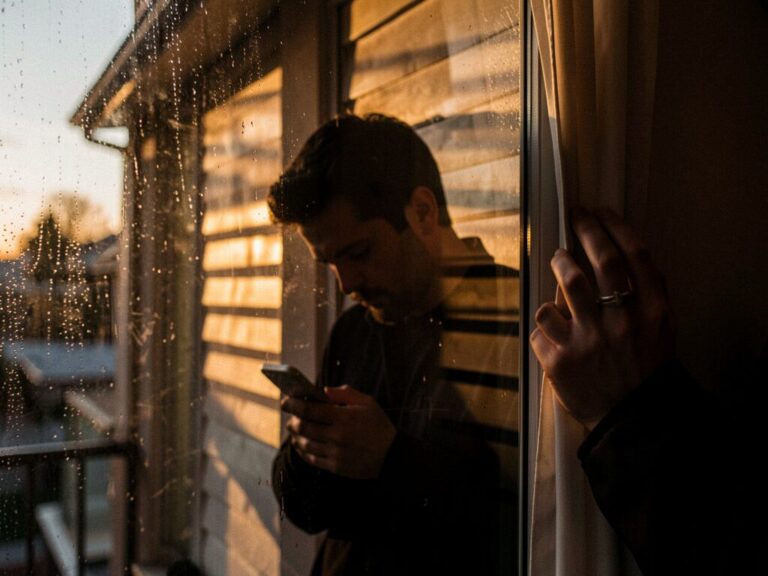
The voicemail was from a number he had saved under a different name. He listened to it in the garage, standing next to the Civic, the concrete cold beneath his shoes. Her voice was low and warm, the way he remembered it, and she said she was in town for a few days. She said she was staying at a hotel in the Design District. She said she hoped he was doing well.

He deleted the voicemail. He sat in the car for eleven minutes, his hands on the steering wheel, his breath fogging the windshield. The garage light flickered above him, casting shadows that shifted and dissolved. He did not call her back. He did not text her. He went inside and kissed Patricia on the forehead and told her he loved her, and he meant it when he said it.
But he did not delete the number from his phone. And he did not stop thinking about the hotel in the Design District, about the possibility of a room with blackout curtains and a bed that had been made by someone else, about the kind of silence that came from being somewhere no one knew your name. He thought about it the way Zachary thought about Jason Robertson’s contract, a set of facts he could recite without having to admit what they meant.
The Nothing That Happened Today
This is the part of the story where the reader expects the thing to happen. The hotel room. The threshold crossed. The crumpled sheets and the taste of the next morning’s coffee, bitter and foreign, the kind of coffee you drink in a hotel lobby because you don’t know where else to go. But the thing did not happen. Not that night. Not that week. Not yet.
What happened was that Raymond kept driving to the Deep Ellum garage. He kept sitting in the Civic with the engine off, watching the headlights sweep across the concrete. He kept watering the dying jade plant with water he knew was not enough. He kept reading the article about the man in Oak Lawn, the one who had set his own house on fire, and he kept trying to understand what it meant to be alone in a room you had built yourself.
The woman from Austin left town. She sent a text that said maybe next time, and he replied with a thumbs-up emoji, the most cowardly form of communication ever invented. He watched her message thread disappear to the bottom of his screen, buried under conversations about carpool schedules and dentist appointments and the logistics of an eleventh birthday party. He told himself it was over. He told himself nothing had happened.
But the wanting had happened. The door had been opened. And Raymond Chandler, industrial designer, husband of fourteen years, father of an eleven-year-old boy, sat in a parking garage on Elm Street and listened to the sound of his own breathing, and he understood that the fire does not have to be real to burn. The smoke does not have to be visible to choke you. He had not set his house on fire. He had not even lit a match. But he could feel the heat, gathering in the walls, waiting for the moment when the silence would become too much to hold.
The jade plant died on a Friday. He found it on his desk, the leaves curled and brown, the soil cracked and dry. He threw it in the trash, pot and all, and he did not buy a new one. He did not replace it with anything. The empty space on the windowsill was the most honest thing in the room.
Meet discreet married men in Dallas
Join a discreet and welcoming community.