The Cartography of Absence: One Woman’s Map of a Secret Life in Bristol
She doesn’t wait well. That’s the first thing you should know about Saskia. She has never been good at patience, not for trains, not for seasonal vegetables, not for the slow, glacial pace of committee meetings at the Bristol Botanical Gardens, where she works as a botanical illustrator. Her colleagues, like Imogen who cultivates seventeen different sourdough starters and names them after forgotten British monarchs, find this amusing. Saskia wants the stem to lie flat now. She wants the light to be right now. She wants the copperplate ink to dry now.
And yet she has been waiting for three years.
Three years of a particular kind of waiting, the kind that has its own geography. Bristol becomes a city of coordinates mapped to his schedule. The Clifton Suspension Bridge at 5:47 PM on a Tuesday, that’s the window when he might call. The Harbourside on a Sunday morning, when families cluster with buggies and the air smells of fried dough, that’s where she doesn’t go, because that is his territory. The BBC recently reported that a Rolls Royce ‘state-of-the-art’ facility is to be built at Filton, a vast cathedral of engineering rising from the old airfield. Saskia read the article twice, not for the industrial news, but because she knows that is where he sometimes works. She has never told him that she knows his office postcode.
This is what you learn, as a mistress in Bristol: the city speaks in two languages. There is the public language of the Evening Post and the Bristol Live updates, the new cycle lanes and the redevelopment of the Old Market. And then there is the private language, the one you decode alone, the one that tells you where you can and cannot walk, which cafés are safe, which bus routes to avoid on Saturdays. A woman of forty-six does not giggle into her phone in public waiting rooms. She knows better.
The Riddle of the Ordinary
People assume that a mistress lives in a state of permanent intensity, a soap opera of stolen glances and hotel bookings. They imagine her as younger, perhaps, or more reckless. The reality, Saskia has discovered, is far more ordinary. The affair lives not in grand gestures but in the small, deliberate not-doings: the text she doesn’t send when she wants to, the Tuesday evenings she keeps deliberately blank on her calendar, the moment she lets a call go to voicemail so she can replay his voice three times before picking up.
Her own life is, by any measure, full. She has a flat in Bishopston with a dying houseplant named Sylvia that she has been trying to revive for two years. She has Mercia, her cat, who is seventeen and has developed a habit of sitting directly on Saskia’s chest while she works. She has a brother in Hereford who sends her links to property listings he thinks she should buy. On paper, nothing is missing. She is not escaping a bad marriage, a dead-end job, a chronic loneliness. She is simply, deliberately, choosing this.
And that, perhaps, is the part that unsettles other people most. The freedom to choose something that has no official future.
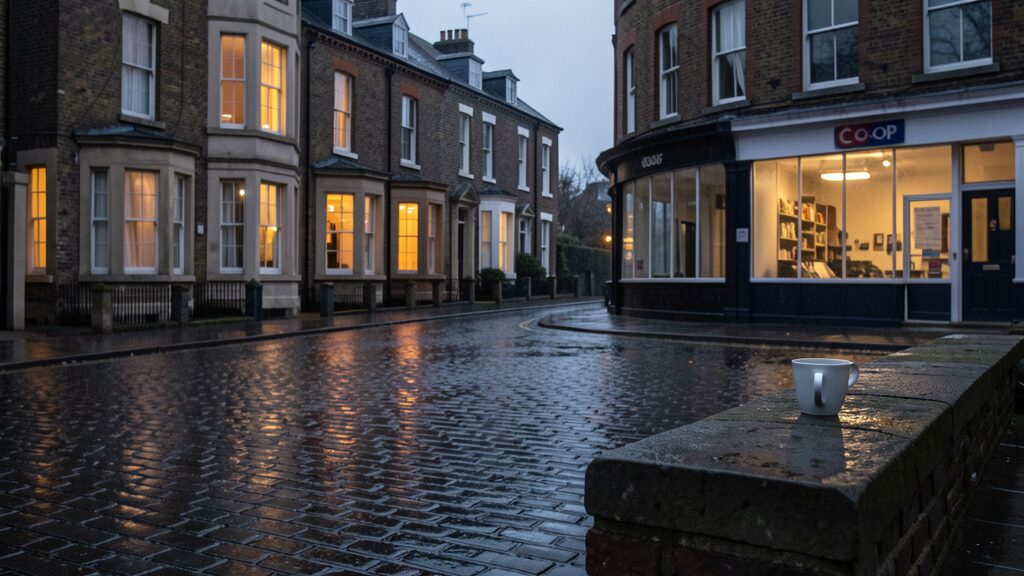
A YouGov study from last year found that a significant percentage of British adults believe infidelity is “always wrong,” yet the same study showed that a third of respondents had themselves engaged in some form of secret relationship. The math of hypocrisy is familiar. Saskia knows what her neighbours on the Gloucester Road would say, the ones who nod at her outside the Co-op and ask if she’s having a nice weekend. She knows what Imogen would say, if she ever told her, Imogen, who once cried for three days after her husband looked at a waitress for too long.
So she doesn’t tell them. The secret is not a burden. It is a currency. It is the only thing that is entirely, completely hers.
The Power of Being Chosen
There is a particular kind of pride that comes with being chosen, deliberately, when a man has every reason not to choose you. He has a life: a partner of seventeen years, a fifteen-year-old daughter whose school play he attended last Thursday, a mortgage on a Victorian terrace in Redland. He has everything to lose, and he chooses, again and again, to walk toward her.
Saskia is not naive. She knows what the statistics say. She knows that most of these stories end the same way, in silence, or in tears, or in a quiet email that begins with “we need to talk.” She knows, because she has read the Reddit threads in the small hours, because she has seen the women who came before her on forums with names like “Surviving the Affair.” But knowing the ending does not diminish the present. If anything, it sharpens it.
The last time they met, it was raining. Bristol rain, the kind that seems to come from every direction at once. She had been waiting in the doorway of a charity shop on North Street, a place she had chosen because it was equidistant from both their worlds. He was late, twenty-three minutes late, she counted, and in those twenty-three minutes, she did not look at her phone. She did not check her watch. She stood very still and let herself feel the cold air on her ankles, the spray of water from a passing car, the distant sound of a bus grinding gears on the hill. She let herself want.
That is the secret that no one tells you about being a mistress. The waiting is not punishment. It is the point.
In those minutes, she owns him. He is not with his daughter, not in a meeting, not folding laundry or arguing about the council tax. He is entirely in the space between them, moving toward her, carrying the weight of his own wanting. By the time he arrives, slightly breathless, his hair damp, his eyes apologetic, she has already had the encounter. The wet pavement, the metallic smell of rain on asphalt, the low hum of a refrigerator from the shop behind her, these things are more intimate, sometimes, than anything that follows.
The Ritual of Return
Afterward, there is always the taste of coffee. Not the coffee itself, but the memory of coffee that lingers on her tongue the next morning, a ghost of a café they passed, of a conversation they had. She never drinks coffee when she is alone; she is a tea drinker, proper builder’s tea with milk. But when she is with him, she drinks whatever he orders. Black. Sugarless. She does not like it. She drinks it anyway.
This is the detail that haunts her: the small, pointless concessions.
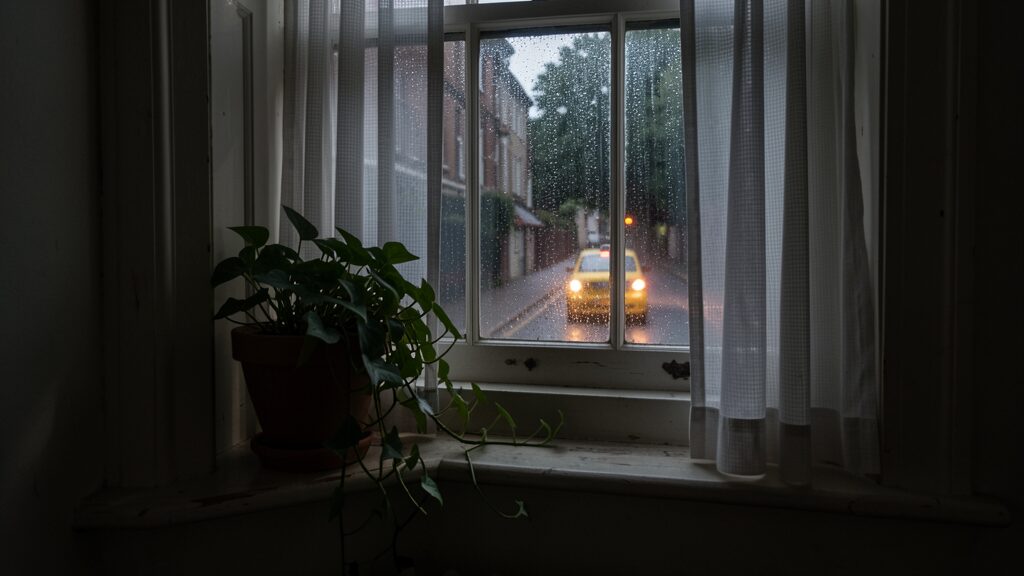
When she returns to her flat afterward, always alone, always by taxi or on foot, never together, the space feels different. The quality of the light is wrong. The cat gives her a look of pure, feline judgment. Sylvia the houseplant droops more dramatically than usual. Saskia pours herself a glass of water, stares at the dark window, and thinks about the next time.
A Pew Research Center study on modern relationships suggested that the most common emotion people report after infidelity is not guilt, but confusion. They do not know what they want. They are surprised by their own choices.
Saskia is not confused. She knows exactly what she wants. She wants the anticipation. She wants the hour that always follows their meetings, when her skin still remembers where he touched her, when the world seems to have been poured through a finer sieve. She wants the quiet, unspoken agreement between two adults who have looked at each other and said, without ever saying it: this is worth the risk.
The City She Cannot Name
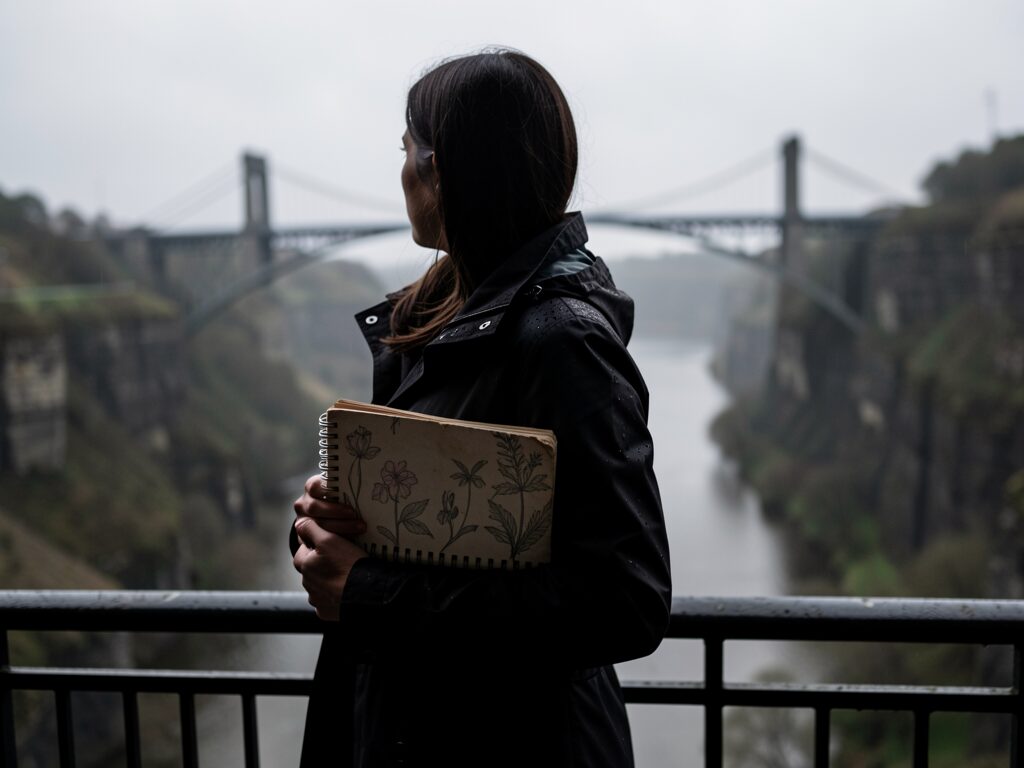
Bristol is a city of bridges. She crosses them constantly, without thinking. Brunel’s great ironwork, the suspension cables arcing against the December grey. She wondered once, idly, whether the affair would feel different if she lived in a city without bridges. London, perhaps, where the river is wider and the crossings are tunnels. Or somewhere inland, where there is nothing to cross at all.
The bridge matters. She knows it matters. Every time she crosses it, she is leaving one world for another. On one side, her life: the botanical illustrations, the cat, the dying houseplant, Imogen and her sourdough starters, the quiet Tuesday evenings. On the other side, the life she visits, the life that has no name and no furniture and no mail.
She is a woman of forty-six, which is a strange age to be a mistress. Too old for the romance of youth, too young for the acceptance of age. Old enough to know better. Old enough not to care.
The Rolls Royce facility at Filton will take years to build. She will still be here, probably. She will still be waiting. She will still refuse to look at her phone when she knows he is in a meeting, because the wanting is the point. The not-having is the point. The secret, which is the only thing that is entirely hers, is the point.
Saskia has never looked at another woman and felt jealousy. She has the thing, and the thing is not the competition. The thing is the choice. Every day, he chooses her. Every morning, she wakes up in her flat on her street in her city, and she knows that somewhere across the bridges, someone is thinking about her.
That is not nothing.
That is everything.
Find a mistress in Bristol
Free sign-up. Manually verified profiles. No commitment.