The Art of the Parallel Life: Notes on Becoming
A City of Ghosts and Glances
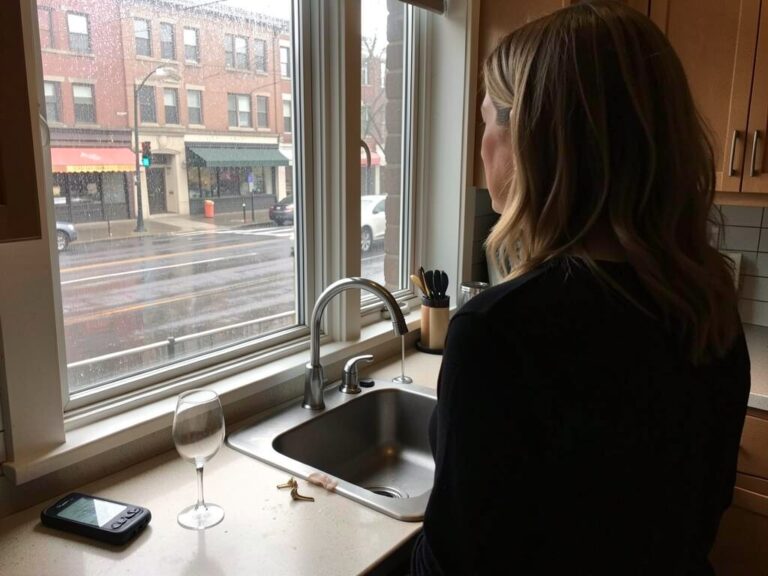
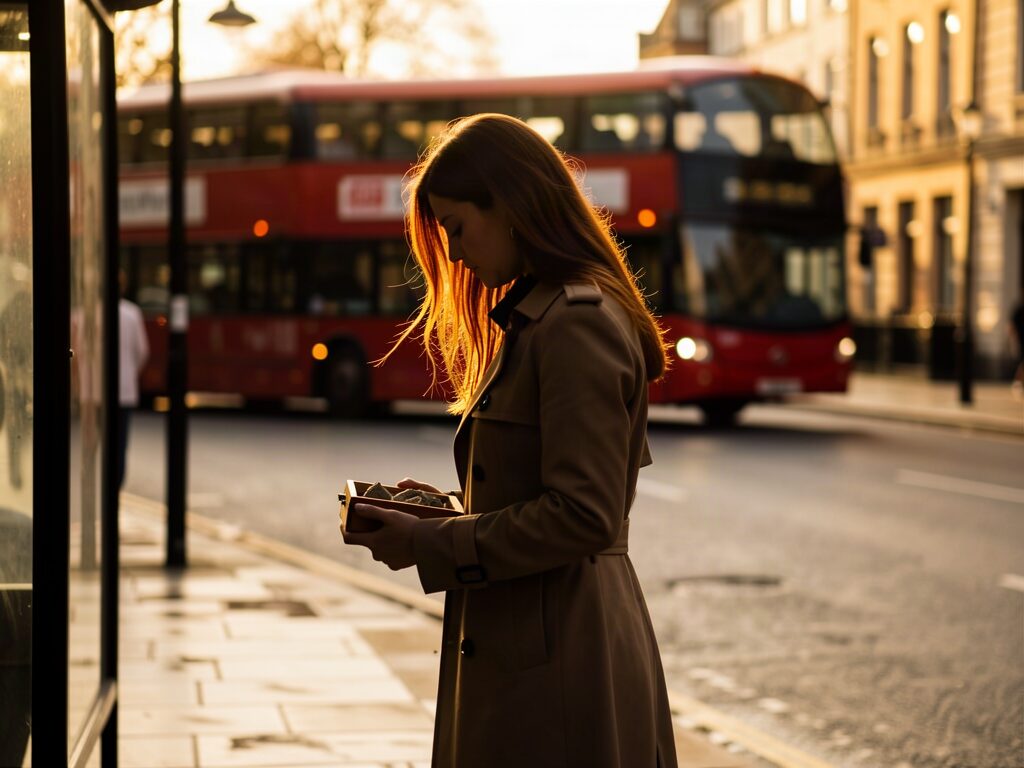
There is a particular quality to the light in my part of London in the late afternoon, especially in the late autumn. It falls in long, golden sheets across the pavement, catching the dust motes stirred up by the last of the lunchtime crowd. I was thinking about this the other day, standing at the window of my studio, watching a woman on the opposite side of the street. She was waiting for a bus, a Sainsbury’s bag in one hand, her phone in the other. She looked so terribly, achingly ordinary. And I thought, no one looking at her would suspect a thing. No one looks at me and suspects a thing, either. That’s the entire point.
According to a recent YouGov study, a significant portion of British adults believe that emotional infidelity is just as damaging as a physical one. I read that report with a wry smile. The ethics of it, the moral weight of it, is a subject for people who have the luxury of time to theorise. For me, it’s not a question of high moral philosophy; it’s a question of survival, of a particular kind of self-preservation that has nothing to do with my marriage, which is, and has always been, a good one. Jack is a good man. He is attentive, kind, and a wonderful father to our daughter, Amelia. We have been married for sixteen years. We share a life, a home, a history. And yet, here I am. An unfaithful wife in London.
I’m not looking for a defence. I’m not looking for absolution. I’m simply stating a fact. I’m an archaeologist, not the kind in the fedora who hunts for lost arks, but the quiet kind, a finds specialist who spends her days in a climate-controlled lab, cataloguing the detritus of Roman Londinium. I deal in the fragments of other people’s lives: a piece of a pot, a corroded belt buckle, a coin stamped with the face of a long-forgotten emperor. I am, in a sense, a professional voyeur of the past. And perhaps that is why I have become so attuned to the weight of hidden things in the present. My work is about piecing together a story from what is left behind, from the unseen and the disregarded. My life has become a similar exercise.
The Weight of a Leather Glove
My affair began, as these things often do, not with a thunderclap but with a whisper. It’s not about the sex, you see. It’s about the conversation. It’s about the anticipation. It’s about being seen, not as Amelia’s mother, or Jack’s wife, or the slightly eccentric expert on bone combs who gives the occasional lecture at the museum, but as myself. A woman named Eleanor.
His name is not important. Let’s call him David. He’s an architectural historian, which means we speak the same language, a language of strata and context, of the stories embedded in physical things. We met at a symposium on the V&A’s recent acquisition of a medieval psalter. The talk was dreadful, the wine was tepid, and I found myself sitting next to him, making quiet, pointed remarks about the speaker’s dubious interpretation of a marginal illustration. He laughed, a low, warm sound that felt like a physical touch. The wait between the end of the symposium and our first coffee was a sort of torture I hadn’t anticipated.
For a week, I replayed that conversation in my head. I remember the way the light caught a silver thread in the tweed of his jacket. I remember the faint scent of him, something clean and woody, like sandalwood and rain. I remember the way he looked at me when I was speaking, as if he were memorising my face. I was so acutely aware of the physical space between us, the six or seven inches of air that separated his arm from mine on the armrest, that it felt like a tangible, buzzing line. That texture of anticipation, that hum of potential, was more intimate than anything I’d felt in years. It was a sensory anticipation that had nothing to do with the promise of a night together and everything to do with the promise of being understood.
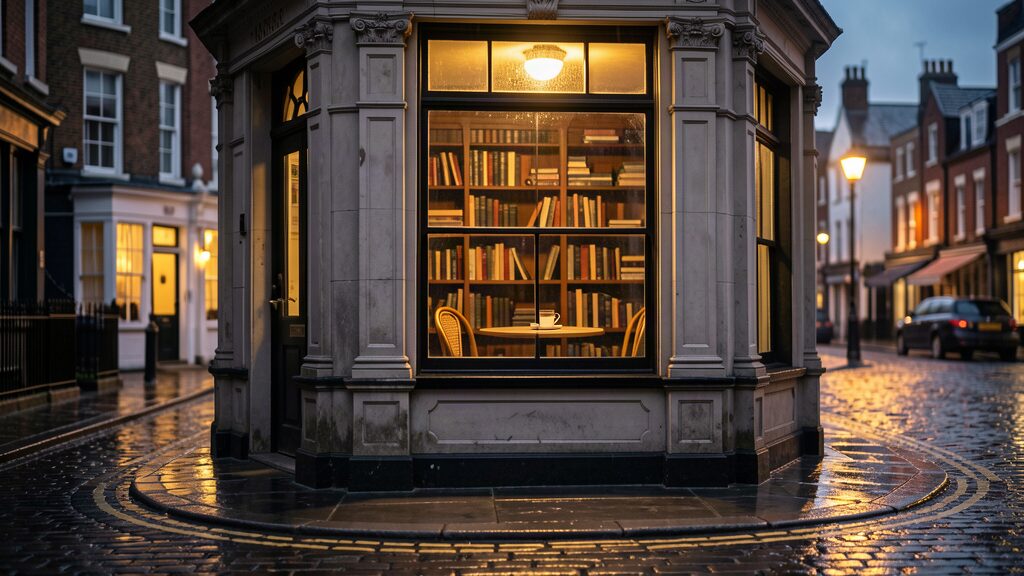
When we finally did meet for that coffee, at a little place in Fitzrovia, I knew. We talked for four hours. We didn’t touch, not once. But the air between us was thick with a kind of gravity. My coffee went cold. I noticed things I wouldn’t normally notice: the way his cufflink was slightly loose, the tiny scar on his thumb, the way he swirled his cup before taking a sip. The details, the minutiae, became a language of their own. It’s funny how, in my day job, I’m so patient with the detritus of history, but I have so little patience for the clutter of my own feelings. But with David, it’s different. The anticipation is the point. The second meeting, two weeks later, ended in a kiss in a doorway in the rain. It was hurried, desperate, a promise of things to come. And then we parted.
The Mechanics of the Double Life
The logistics of being an unfaithful wife in London are, contrary to what you might believe, largely mundane. It is not a whirlwind of champagne and hotel rooms. It is a meticulous, almost archaeological process of excavation and concealment. It’s about finding the right layers.
My studio at the Institute has become my sanctuary, my alibi. It’s a haven of calm, a place where my life makes sense. The day after my first kiss with David, I sat there, amongst the labelled boxes of bones and the shelves of reference books, and I felt a profound sense of peace. I was not Jack’s wife. I was not Amelia’s mother. I was just Eleanor, a woman who had just kissed a fascinating man. The coffee the next morning tasted different. It was stronger, sharper. The smell of it mingled with the scent of his cologne, which clung stubbornly to the collar of my coat. I resisted washing that scarf for days. It was a piece of him, a physical anchor to that moment I could carry with me.
The affair exists in its own temporal bubble. We meet on Tuesdays, usually. Jack has a late meeting with his architectural practice partners on Tuesdays, and Amelia has her cello lesson in the city centre. I have used these two hours for years to lose myself in the stacks of the British Library. Now, they are mine. They are our hours. It is a schedule as rigid and predictable as the Roman grid.
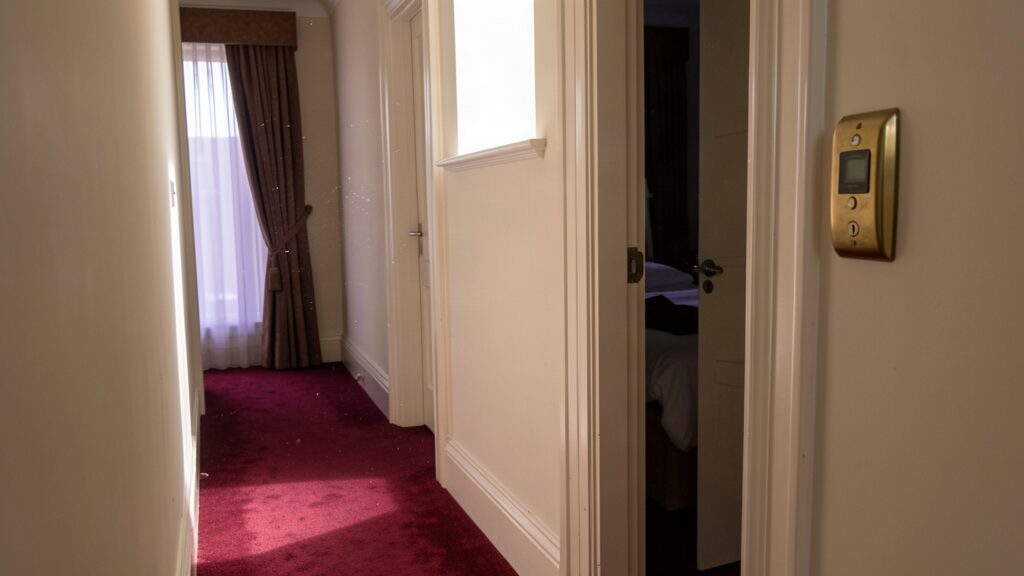
We rent a small room in a hotel near Paddington. It’s a faceless, anonymous place, which is precisely its appeal. No one looks at you twice. The corridors are quiet, the carpets are thick, and the windows overlook a row of Victorian townhouses, their brickwork a familiar London ochre. I know every crack in the pavement from the station to the hotel. I know the precise moment the automatic doors sigh open. I know the smell of that particular lobby, a cocktail of dust and lavender polish. It’s all part of it. The ritual of the walk, the beep of the keycard, the click of the lock behind me. It’s a performance. I am the architect of this space, a space carved out of time and silence.
The sex is part of it, of course. But the part I crave, the part I replay in my mind for days afterwards, is the silence that precedes it and the smaller, more poignant silences that follow. I am learning that a shared glance can be more intimate than a shared bed. The sound of his breathing in the dark, the rustle of the sheets as he turns, the quiet murmur of the traffic from the Bayswater Road below, these are the sounds that fill the erotic blank that I live in between our meetings. The crackle of his phone when he texts me a simple photo of a building he’s working on, a shared joke, a random thought. I stare at that screen, the glow of it illuminating my face in the dark of my bedroom as Jack sleeps beside me, and I feel a jolt of pure, electric life.
It’s a possession, a reclaiming of a self I had lost. It’s a luxury I have chosen to give myself. I don’t feel guilty, not in the way you might expect. I feel a sense of ownership over my own desire. I am not a victim of a passion I can’t control; I am an active participant in my own happiness. I have never once disparaged Jack to David. He is not a villain in my story. He is simply not the hero of this chapter.
An Unseen World
To be an unfaithful wife in London is to live in a city within a city. It’s a map of glances and coincidences. You become hyper-vigilant, acutely aware of the geography of the city in a new way. You learn which cafes are empty on a Tuesday afternoon. You learn the quiet corners of the National Gallery. You learn the one independent cinema in West London that shows subtitled films to crowds of mostly elderly patrons, and where the back row is always dark. It’s a layer of the city that exists just beneath the surface, invisible to the commuters and the tourists.
Yesterday, I was in the lab when I had a phone call. A forensic accountant, a friend of Jack’s, was asking me about an inlay from an antique piece of furniture. We got to talking about the news, about the story I had seen in the evening Standard about a man found shot dead inside a vehicle in east London. It felt a world away, a grim, brutish reality that had no connection to my life of clean labs and 2,000-year-old bone. I thought about the lives that must intersect with such events, the secrets that lead to a car in a dark parking lot. My own secrets, I thought, are of an altogether gentler sort. They are not born of violence, but of a profound, quiet need.
The scholar in me, the professional voyeur, knows that every object, every shard, has a secret. It holds the memory of a meal, a hand, a journey. My life is now an object with several layers of history. There is the public layer, the life with Jack and Amelia that is as documented and reliable as a civic record. And then there is the hidden layer, the one with David, written in a language only I can read. It is an act of careful curation, the editing of my own biography. I am the archivist of my own afterlife.
I know this cannot last forever. The construction of any life is also the construction of its eventual ruin. But I am not thinking about the ruin. I am currently excavating a site, a beautiful, secret site, and I’m simply documenting what I find there. I remember picking up my daughter from a playdate the other day. She was telling me about a girl in her class who had broken a rule. Her tone was one of outraged innocence. I nodded and made the right sounds of encouragement. But a fleeting thought crossed my mind: “I shouldn’t have laughed at that.” It was a small crack in the façade, a tiny tremor of hypocrisy. I had just lied to my child, by omission, about the nature of right and wrong, and I felt a brief, sharp sting of something that might have been shame. But it passed. It is a price, I tell myself, that I am willing to pay for this feeling of being utterly, terrifyingly alive. The sensation of the next meeting, the one planned for Thursday, is already singing in my blood. The anticipation is my steady, chosen companion.
This is my testimony, then. To be an unfaithful wife in London is not a tragedy. It is not a comedy. It is an art form. It is the art of holding two truths in your head at once, of inhabiting two distinct timelines, of living in the glorious, aching silence between two worlds. And I, for one, am a master of the craft.
Meet discreet married women in London
Free sign-up. Manually verified profiles. No commitment.