The Beekeeper’s Second Swarm
The first frost came late to Winnipeg that October, a thin white rime that vanished by noon and left the streets smelling of wet asphalt and dying leaves. For most, it was just another autumn morning. For him, it was the third Tuesday of the month, which meant nothing special to anyone but himself.
He scraped the ice off his windshield at 6:47 a.m., his breath clouding in the cold, and drove north on Main Street past the shuttered storefronts and the huddle of men already waiting outside the N’Dinawemak shelter. Local news reports had been warning for weeks about a high-risk offender, a man convicted of manslaughter with a documented history of violence, being released into the city. The police had issued a public notification. His wife had mentioned it at breakfast, her voice tight with unease, and he had nodded, made the appropriate sounds of concern, and thought about something else entirely.
His name was never the point. What mattered was the architecture of his days.
The Call of the Swarm
He worked as a commercial beekeeper, a profession that sounded rustic and gentle and was anything but. His operation was small by prairie standards, about three hundred hives spread across ten outyards in the Interlake region, but the work was relentless. From April to October, he spent four days a week driving his battered Ford F-250 along gravel roads that turned to gumbo after rain, lifting supers filled with honey that weighed nearly a hundred pounds each, and breathing the sweet, chemical smoke that pacified the colonies.
His wife, Elena, taught Grade 3 at École Sage Creek. They had been together for eleven years, married for nine. Their son, Lucas, was eight. Lucas had inherited his mother’s patience and his father’s distractibility, a combination that turned homework into a negotiation every evening. The cat, a ginger tabby named Brie, slept on the boy’s bed and hissed at anyone who tried to move her.
The family life was real, solid, well-observed. He loved it the way you love a house you built yourself: with pride, with fatigue, with a secret knowledge of every flaw in the foundation.
And yet.
Domestic Sublimation
On that particular third Tuesday, he left the house at seven and drove not to his apiary but to a parking lot behind a strip mall on Pembina Highway. He sat there for twenty minutes, the engine running, the heater blowing warm air across his hands. He was waiting. That was the thing people never understood about what he did: it was almost entirely composed of waiting.
He thought about the honey supers he should be checking. The hive beetles that had plagued Outyard 4 last season. The conversation he and Elena had had over dinner the night before, about the city’s municipal budget and the potholes that were swallowing entire tires on Arlington Street. He had listened with real attention, had asked follow-up questions, had taken a second helping of the potato gratin she always made a little too salty. He never let on.

There was a film he had watched alone, late one night when Elena and Lucas were asleep, an old British movie called A Single Man by Tom Ford. The protagonist’s life was composed of ritual and concealment, of holding oneself together through the sheer force of routine. He had seen himself in it, briefly, and then turned it off before the ending.
Small human contradiction: he believed, fiercely and without irony, that family was the most important institution in society. He had told his son as much, just last week, when Lucas asked why they couldn’t get a puppy. “Because family takes commitment,” he had said, “and we’re already committed to this cat.” He believed it. He also believed, without contradiction because the human heart can hold anything, that he deserved the other thing too.
The Courtship of Distance
The technique of his infidelity was ordinary but effective. It unfolded through a series of absences, of gaps in the schedule, of afternoons that officially belonged to the bees and unofficially to something else. He had learned that the most potent erotic force was not proximity but its opposite: the days between, the hours of not-knowing, the silence of a phone that might ring at any moment.
He would return from his outyards with pollen in his hair and propolis under his fingernails, smelling of woodsmoke and the sharp tang of formic acid from the mite treatments. Elena would kiss him hello and say he smelled like the country. She had said this for so many years that it had become a kind of shorthand for love.
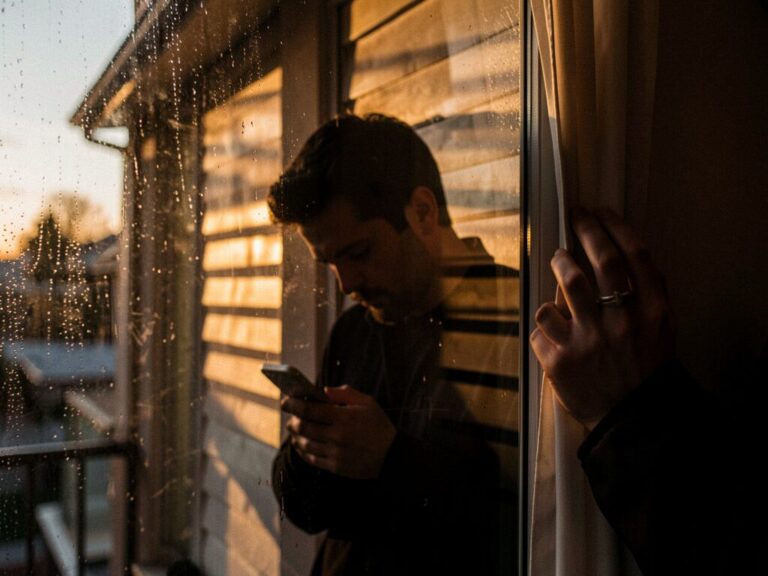
He would shower, eat dinner, help Lucas with his spelling words. Then he would go to the garage to clean his smoker and check his email on his work tablet, and there it would be: a single short message, a timestamp, a suggestion. Nothing explicit. Nothing that could not be read as professional. The emptiness of the words was what gave them their charge.
He would write back the next morning, in the field, with the sun low and the bees beginning to stir. He would describe the light on the canola fields, the sound of the wind through the poplars, the way the frost had burned off the grass. He would describe the waiting itself.
Risks and Reputations
The city was smaller than people thought. The risk of exposure was not theoretical. The high-risk offender the police had warned about, the one everyone in the news was discussing, was a stranger to him. But the principle was the same: in Winnipeg, everyone knew someone. The social fabric was dense, interwoven, full of overlapping circles that met at hockey rinks and community centre meetings and the Saturday morning farmers’ market at the Forks.
He had nearly been caught once, six months earlier. He had claimed an apiary inspection in St. Norbert and had instead spent three hours in a motel on the Perimeter Highway. When he came home, Elena had mentioned that a friend of hers had seen his truck parked near the river. “Weren’t you supposed to be on the other side of the city?” she had asked, not suspicious, just curious.
He had invented a broken belt on the truck, a long wait for a tow truck, a detour past the river bank. He had done it calmly, with the right amount of irritation, and she had accepted it. That was when he realized how easy it was: not because she was naive, but because she trusted him. The trust was the fuel. He burned it every time.
According to a report from the Winnipeg Free Press, the local police service had issued a public notification about the offender because of the “high risk he poses to the public, particularly women.” He read that article on his phone while sitting in the parking lot, and he felt a kind of shiver that was not quite shame. He was not that kind of threat. He was the other kind, the one that operates in plain sight, the one that leaves no bruises and no witnesses.

The Hive at Night
There was a particular sensation he had come to recognize, an interior queasiness that settled in his stomach on the nights before a planned encounter. It was not guilt exactly, because guilt implies a clean division between right and wrong, and his life was not that simple. It was more like the feeling of balancing on a narrow beam: the knowledge that one misstep would send everything crashing down, and the strange, vertiginous pleasure of standing there anyway.
He would lie awake next to Elena, listening to her breathe, and he would think about the next day. The hours it contained. The gap in his schedule. The smell of the room he would walk into: stale coffee, carpet cleaner, the faint antiseptic edge of a motel that had been cleaned too many times with the same solution. The sound of the door clicking shut behind him. The sound of the silence that followed.
None of this was described. He never told himself what happened inside those rooms, because the telling would have made it real in a way he could not sustain. The gap was the point. The before and after were the story. The middle was a blank space where time disappeared, and that was the only part that mattered.
The Taste of the Next Morning
He woke the day after the third Tuesday at 5:30 a.m., as always, and made coffee in the dark. The taste was metallic, bitter. He had not slept well. He had come home late, missing dinner, fabricating a story about a broken hive tool and a long drive back from Gimli. Elena had already put Lucas to bed. She had saved him a plate of food, covered in foil, in the fridge.
He ate standing up, staring at the backyard through the kitchen window. The frost had been heavier this time, turning the grass white. The neighbour’s dog, a small terrier, was barking at nothing. He could still feel, faintly, the scent of someone else’s perfume on the collar of his jacket, and he made a mental note to air the jacket out before he wore it again.
The ritual of the day after was always the same: a careful inventory of traces, a mental map of everything that could betray him. The texture of the clothing. The faint indentation on his wrist from a watch he had removed and replaced. The way the coffee tasted, which was different than usual, because everything tasted different on those mornings.
He would go to his apiary later that morning and open a hive. The bees would be sluggish in the cold, clustered together for warmth. He would lift the inner cover and watch them, thousands of them, moving in the same slow choreography, and he would think about how a hive is a system of perfect deception: the queen appears to rule, but the workers decide everything. They let her believe she is in charge. They hum their secret communication and she never knows.
He thought about that as he drove east on the Perimeter, the city shrinking in his rearview mirror. The sun was up now, thin and pale, and he was alone.
The unfaithful husband in Winnipeg, 38 years old, commercial beekeeper, father of an eight-year-old boy, partner of eleven years, drove into the morning and did not think about what he was doing. He thought about the honey flow, the weather forecast, the cat named Brie, the dish of potato gratin he could never get right no matter how many times he tried, and the man in the news who had been released into the city, a threat everyone could see.
He was the threat nobody saw. He was the bee in the wall, building a secret colony inside the structure of a life. And he would keep building, one absence at a time, until the whole thing collapsed or until he stopped. He did not know which would come first.
The coffee was cold now. He drank it anyway.
Meet discreet married men in Winnipeg
Sign up for free and start a new story.