The Hour Between Smog and Silence: One Calgary Afternoon
The air over Calgary had turned the colour of bad news. By late morning on a Tuesday in late May, the sky was a bruised yellow, and the smell of distant Saskatchewan wildfires had settled into the city like a guest who refuses to leave. Environment Canada had issued an air quality warning, according to CTV News Calgary, urging residents to stay indoors, to close their windows, to limit exposure. But Gordon Keeler had been outside since six, and he had no intention of coming in.
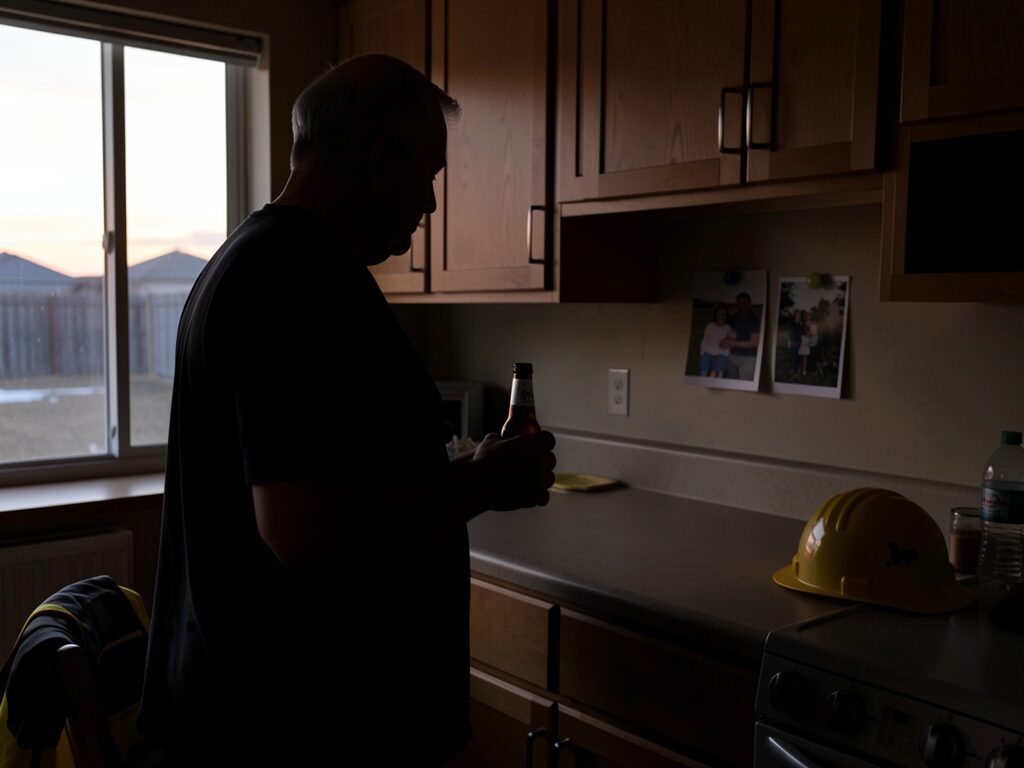
He stood at the edge of a construction site in the southeast quadrant, where a new development was clawing its way out of former wheat field. The smoke gave everything a sepia filter, as if the present were already becoming memory. Gordon was a project estimator for a mid-size commercial framing company, which meant he spent his days calculating how much wood, steel, and labour it would take to raise the skeletons of buildings that other people would later fill with lives. He was fifty-five years old, married for twenty-four years to a woman named Lorraine, and the father of a nineteen-year-old daughter in her second year at the University of Lethbridge and a fifteen-year-old son who had recently decided that the only thing more embarrassing than his father was the family minivan. This was the life he had built. This was the life he was in the middle of dismantling, board by board, without a permit.
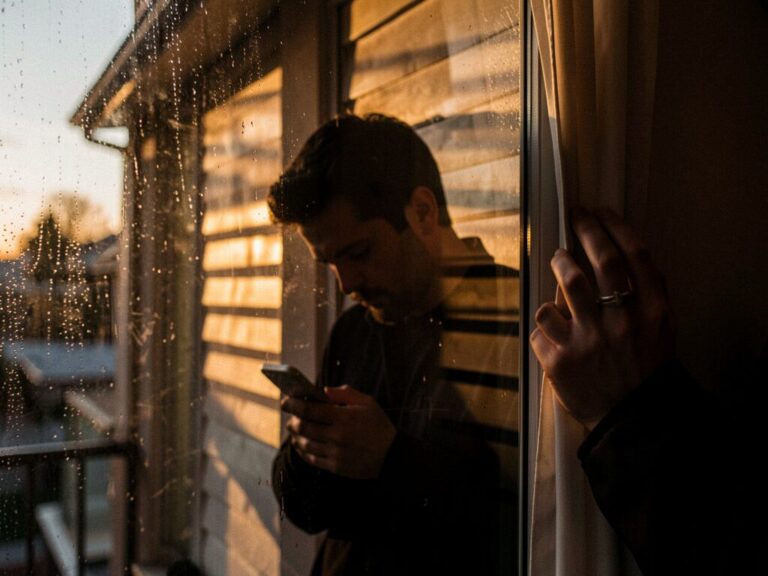
The smoke was a useful alibi. It gave him a reason to check his phone more often, weather updates, air quality indices, evacuation alerts. In truth, he was checking for a different kind of signal, one that came in the form of a single green dot on a messaging app. The dot was attached to a woman whose name he had not yet said out loud, not even to himself when he was alone in his truck. He thought of her as the 10:23, because that was the time she usually replied to his midday messages, as if her day had a small window carved into it just for him.
The Watch You Forgot
Gordon had stopped wearing his watch. It was a sensible stainless-steel Timex that Lorraine had given him for their fifteenth anniversary, engraved on the back with a date that now felt like ancient history. He had not made a conscious decision to abandon it. One morning, he had simply left it on the bathroom counter, and by the time he noticed its absence, he was already halfway across the city, and the day felt different. Lighter. As if he had shed a small but constant weight he had not known he was carrying.
He caught himself stealing glances at his bare wrist, not to check the time, but to admire the pale band of skin where the watch had been, a ghost of a lifespan that no longer fit. That afternoon, standing in the smoky haze with a hard hat tucked under his arm and a tablet in his hand, he found himself thinking about a summer when he was twelve, helping his uncle re-shingle a roof in Airdrie. The heat had been brutal, the tar paper sticky, and his uncle had told him to keep moving because a stopped worker was a failed worker. Gordon had taken that lesson to heart. He had spent the next forty-three years moving, measuring, calculating, building. He had never stopped to ask what he was building towards.
Now he knew. He was building towards a 10:23 that had not yet arrived.
The Empty Chair
That evening, the smoke thickened. The city issued another advisory. Lorraine was in the kitchen, making a stir-fry with vegetables she had bought at the farmers’ market on Sunday, before the fires had turned the world into a darkroom. She was talking about her mother, who was in a senior’s residence in Okotoks and had called three times that day to ask if the smoke was visible from her window. Gordon answered in monosyllables, the way he had answered for years, the way that had once been called “steady” and was now, he suspected, called “distant.”
His son was in the basement, playing a game that involved shooting digital enemies through walls of smoke that looked exactly like the real smoke outside. His daughter was not there. She was in Lethbridge, which meant she was also not there for dinner, which meant the table had an empty chair, which meant Gordon could look at that empty chair and think about absence without anyone noticing.
Dinner was served at 6:42. Gordon ate. He complimented the sauce, which was true. He asked about his mother-in-law, which was expected. He helped clear the dishes, which was dutiful. Then he said he was going to check the air quality one more time before bed, and he stepped onto the back deck, where the smoke had settled into a thick marine layer of particulate matter, and he called up the messaging app.
The green dot was there.

She had sent a photograph. Not of herself, but of something else. A glass of wine on a wooden table, with the smoke visible through a window in the background. The caption said: Same sky, different house.
It was not a suggestive photograph. It was not romantic. It was a report from a shared reality, two people in the same city breathing the same poisoned air, each of them pretending to do something else. Gordon stared at the image for a long time. He could smell the stir-fry on his hands, could hear the television through the sliding glass door, could feel the vibration of his son’s game through the deck boards. None of it felt real. The photograph felt real.
He typed a reply. He deleted it. He typed another. He deleted that too.
Then he wrote: I know.
It was not a good answer. It was not an answer at all. But it was true, and truth, in this situation, was a dangerous currency.
The Invisible Man
Gordon Keeler had spent most of his adult life being seen without being perceived. He was the man who arrived on time, who spoke in measured tones, who wore the right jackets for the right weather. He was the father who attended parent-teacher conferences and asked about math scores. He was the husband who remembered anniversaries and changed the oil in the minivan and never raised his voice. He was, by every external measure, a functioning adult male in a functioning marriage in a functioning city.
But function is not the same as life.
There was a moment, three years ago, during a family trip to Banff, when Lorraine had taken a photograph of him against a backdrop of Mount Rundle. He had been looking at the mountain, not at the camera. When he saw the photograph later, he had been startled by the expression on his own face. It was not sadness. It was not anger. It was absence. He looked like a man who had already left the frame, even though his body was still there.
He had not said anything to Lorraine about the photograph. He had simply deleted it from the shared album and hoped she would not notice. She had not noticed. That was the thing about being the invisible man: no one saw you disappear.
The 10:23
The next morning, the smoke was worse. The sky was the colour of an old bruise. Schools in the northeast were closed. The news was reporting that the fires in Saskatchewan were still uncontrolled, and that the air quality in Calgary had reached a level deemed “very high risk” for vulnerable populations. Gordon was not vulnerable. He was fifty-five, healthy, insured, and invisible. He drove to the construction site anyway, even though the foreman had told everyone to work from home if they could. Gordon could not work from home. Home was where the empty chair was. Home was where Lorraine asked questions he did not want to answer.
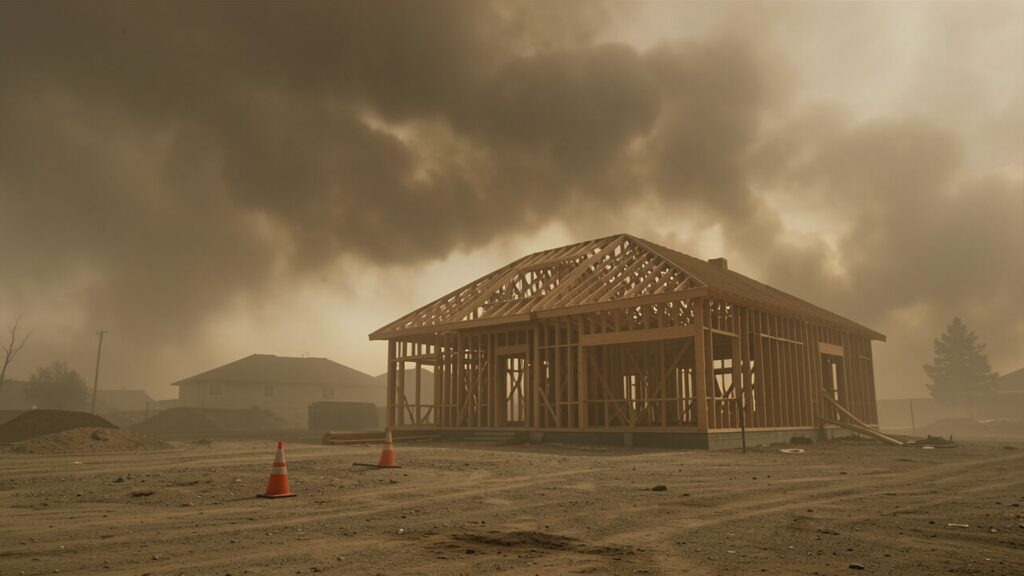
At 10:23, exactly on schedule, the green dot appeared.
This time, she sent a voice memo. He could not play it in the truck, because the Bluetooth was connected and Lorraine could call at any moment, so he waited. He walked to the far end of the site, past the piles of lumber and the idle excavators, and he put his earbuds in, and he listened.
Her voice was low, slightly hoarse from the smoke. She said: I was thinking about the time we almost ran into each other. At the Home Depot. You were buying screws. I was buying paint. You didn’t see me. I watched you stand in the aisle for five minutes, staring at the screws, and I thought: he is a man who takes screws seriously. I liked that about you.
Gordon leaned against a stack of two-by-fours and closed his eyes. The smoke stung. The wood creaked. The voice in his ear was the only clear thing in the world.
I don’t know what I’m doing, she said. I don’t know what you’re doing either. But I like that we’re doing it at the same time.
He listened to the message three times. Then he saved it. Then he deleted the saved version. Then he re-saved it. He was a man caught in a loop of his own making, editing and un-editing a reality he could not quite believe was his.
The Erotic Blank
What happened next did not happen. The article will not describe it. There are no hotel rooms here, no hurried afternoons, no lies told to Lorraine about traffic or overtime. The most powerful moment is the one that exists in the space between intention and action, the moment when Gordon Keeler stood in a smoke-choked construction site, a married man of fifty-five years in the city of Calgary, and made a choice that he had not yet made.
He opened the messaging app. He typed: I want to see you.
He stared at the words for a long time. The smoke swirled around him like a slow river. The city hummed with the sound of traffic and fires and other people’s ordinary lives.
Then he pressed send.
He felt it immediately, the way you feel a door close behind you in a house you are not sure you want to leave. The green dot appeared. The three dots danced. She was typing.
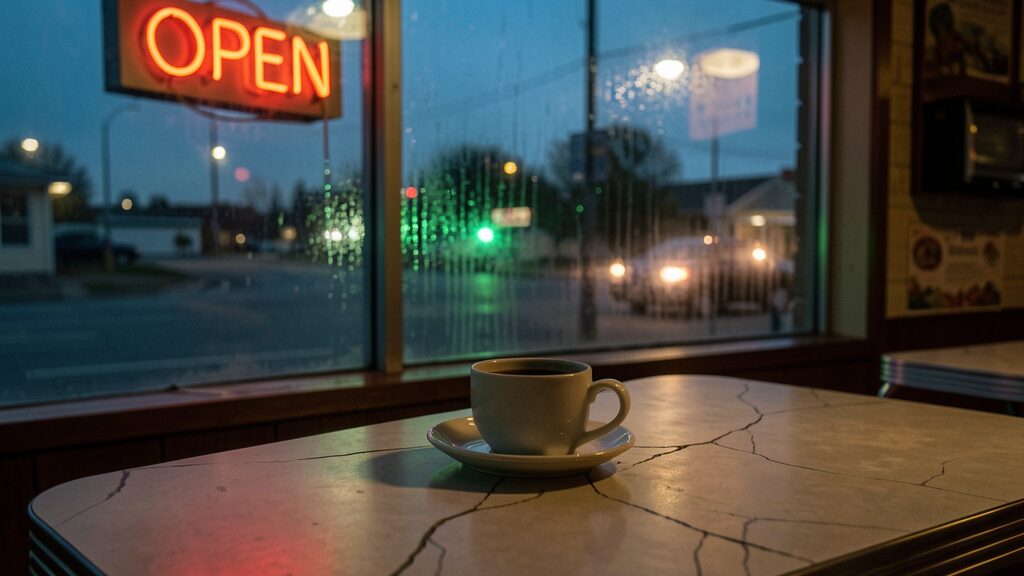
The message that came back was two words:
When and where.
Gordon looked at his wrist. The watch was not there. The band of pale skin was a promise he had made to himself, a commitment to a future that did not yet exist. He had not worn the watch in eleven days. Lorraine had not mentioned it. That was the moment he realized: he had become invisible to her too. Not because she did not love him, but because love, after twenty-four years, had become a kind of comfortable blindness. She saw Gordon the husband, Gordon the father, Gordon the man who took screws seriously. She did not see the man who had stopped wearing his watch.
The Aftermath
There is no aftermath to report. The affair, if it can be called that, when it has not yet crossed the line into physical reality, exists in the space of messages and voice memos and photographs of wine glasses in smoky windows. But the wanting is its own kind of infidelity. The wanting is the seed from which the whole orchard grows.
The next day, the air quality warning was lifted. The smoke cleared. The sky returned to a shade of blue that seemed almost aggressive in its normalcy. Gordon drove home from the construction site with the windows down, breathing the clean air, feeling the absence of the smoke like an absence of an excuse. He had no reason now to check his phone for weather alerts. He had no reason to step outside at 10:23.
But he would find a reason. He had already decided that.
When he walked through the front door, Lorraine was on the phone with her mother. She waved at him, a distracted wave, the wave of someone who had seen him a thousand times and expected to see him a thousand more. He kissed the top of her head, which was what he always did, and he went to the bedroom to change clothes.
The watch was still on the bathroom counter.
He picked it up. He held it in his palm. The metal was cool. The engraving was worn smooth from years of contact with his skin. He thought about putting it back on. He thought about the message he had sent, and the message he had received, and the two words that were waiting for an answer he had not yet given.
He put the watch in his pocket.
Then he walked back into the living room, where Lorraine was still on the phone, and he sat down in his chair, and he stared at the window, and he waited for the smoke to return.
Meet discreet married men in Calgary
Free sign-up. Manually verified profiles. No commitment.