The Geography of Silence: A Lover in Bristol
The Bristol Post reported recently that a single donor had given a record-breaking £20 million to the University of Bristol. I read the article on my phone while waiting for a train at Temple Meads, standing near the clock that has never worked in my memory. Twenty million pounds. One person, one decision, one transformative act. I thought about the gifts we give that no one ever sees, the ones that leave no paper trail, no plaque, no press release. The ones that exist only in the memory of two people.
This is not a confession. I have nothing to confess.
Anchor Points
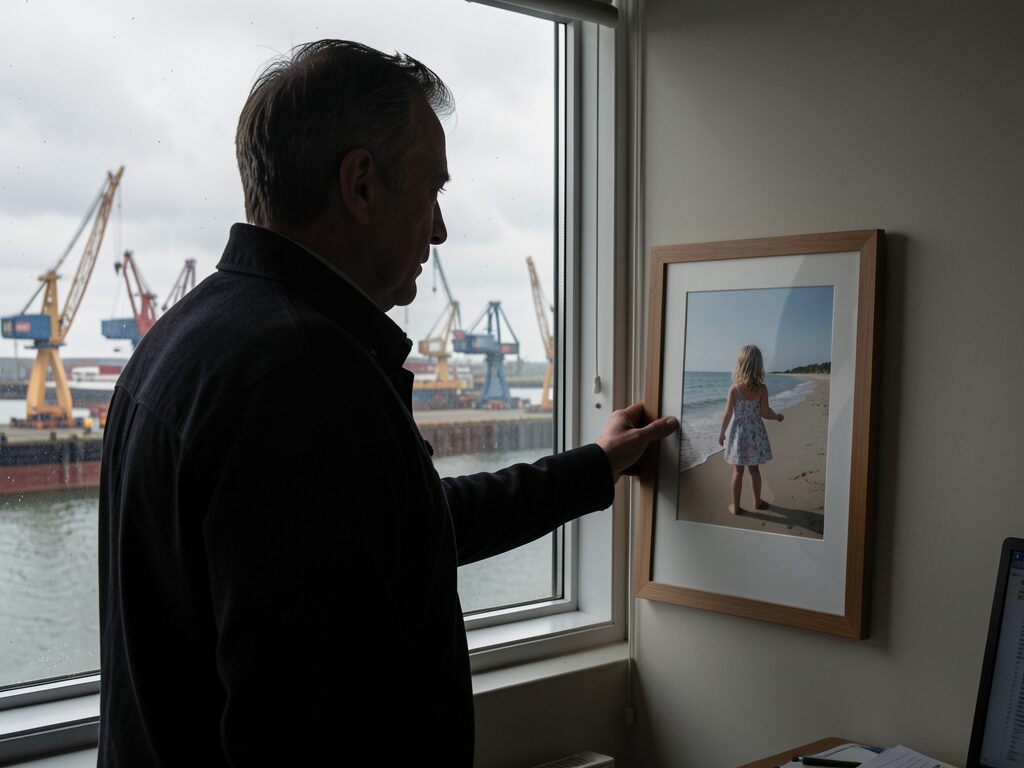
I am a marine civil engineer. That sounds grander than it is. Mostly I spend my days calculating the stress tolerances of harbour walls, modelling the siltation patterns of the Avon, advising on the resilience of sea defences against a rising tide. The work is patient, invisible, cumulative. You lay foundations that no one will ever see, and if you have done your job correctly, nothing dramatic happens. The water stays where it should. The walls hold. The boats pass.
The same could be said of my life as a lover Bristol has known for almost four years now. I am the foundation that no one sees. The careful maintenance. The quiet assurance that when the tide rises, there is somewhere safe to anchor.
I share a daughter with a woman I no longer live with. That is the arrangement. My daughter is nine and lives in Bath with her mother, and I drive the A4 twice a week, every week, rain or shine, because that is what you do. I do not resent the commute. It gives me time to think, to listen to the shipping forecasts for waters I will never sail, to watch the Severn Estuary change colour with the light. Ruth, who shares my office and who can identify every bird in the county by its call alone, once told me that the mudflats here shift so slowly that cartographers have given up mapping them accurately. I liked that. I recognised it.
The Interval
The hardest part is not the secrecy. It is the space between.
She lives in a part of Bristol I never name, in a house I have seen only from the outside. Her garden is long and narrow, with a cherry tree that drops fruit onto a lawn that needs mowing more often than she can manage. I know the smell of that garden in late summer, the bruised sweetness of fallen plums from the neighbour’s tree, the damp earth after a brief shower. I know the sound of her key in the lock, the particular rhythm of her footsteps on the wooden floor, the way the kettle hums before it clicks off. These are the things I hold, not the things the world would assume.
I am not the unfaithful husband. I am the other side of the equation, the one who arrives after the children are in bed, who leaves before the milkman, who knows the postman’s schedule and the neighbour’s comings and goings. Discretion is not shame. It is the form respect takes when the stakes are high. I protect her world because I am not in it. That is the paradox. I exist only in the negative space around her life, in the gaps between her obligations.
Before I met her, I had begun to notice something. Not unhappiness. Something subtler. I would catch my reflection in the dark glass of a train window and not recognise the man looking back at me. Not because he had aged, but because he seemed to have been placed there, like a piece of furniture. Functional, expected, unremarkable. I had become the kind of man who looks at his watch and sees only the next appointment, not the time that is passing.
That has changed. Now I look at my watch and I see the hours stretching toward the next interval. Three days, eleven hours, forty-seven minutes. I count them. I always have.
The Tectonics of Waiting
The Bristol Post article about the £20 million gift mentioned that the donor wished to remain anonymous. I understood that impulse completely. There is a power in giving that is never acknowledged, in being the source of something transformative while remaining unseen. The donor will never stand at a podium, never hear the applause, never see the building or the programme or the scholarship that their money made possible. They will know only that something changed because of them, and no one else will know the why or the how.
The waiting between meetings has its own geography. I have learned the contours of it intimately. There is the immediate aftermath, when the residue of her presence still clings to me, the scent of her soap, the faint echo of her voice in my ear, the particular warmth of a room that has been occupied by someone you love. Then there is the middle distance, where the memory begins to crystallise into something almost archival, a collection of moments I can revisit but not re-enter. And then there is the final stretch, the hours before I see her again, when the anticipation becomes almost physical, a low hum in the bones that no amount of work can distract.
I should not have let my daughter paint her bedroom walls the colour of a stormy sea without testing a patch first. She chose the colour herself, from a catalogue of maritime blues, and I agreed because I wanted her to choose something, to feel ownership over her space. But the light in that room is northern and cool, and the colour has come out darker than either of us expected, almost black on rainy days. I think about this sometimes, late at night, when I cannot sleep: that I gave her the freedom to choose and she chose something that has made her room feel smaller. It is a small regret. A domestic one. It has nothing to do with her, and everything to do with the fact that I am still learning how to be present in the lives I am part of.
The Gift of Being Chosen
I do not know what drew her to me. I have never asked, and I never will. Some things are better left unexamined, like the precise composition of the concrete that holds a harbour wall in place. You test it, you trust it, you move on.
But I know what I give her. It is not romance, not in the way the films portray it. There are no grand gestures, no stolen weekends, no declarations written in the condensation on a hotel window. What I give her is this: a version of herself that exists only in my presence. Someone who is not a mother, not a wife, not a daughter, not an employee. Someone who arrives at our meeting point, always different, always anonymous, and for a few hours is simply a woman who has been chosen.
That is the shift. Before me, she was all those roles, stacked one on top of another like shipping containers, filled with other people’s expectations. With me, she is weightless. I see it in the way she breathes when she walks through the door, the way her shoulders drop, the way her voice changes register. She is not the woman who left her house twenty minutes ago. She is someone else entirely.
And I am the only witness.
What the Water Knows
The Avon runs through this city in a loop so tight that the boats have to wait for the tide before they can pass. The harbour is a managed environment, controlled by locks and gates and the patient calculations of people like me. Nothing happens by accident. Every rise and fall is measured, predicted, accommodated.
That is how I think of my life. Not as a secret, but as a managed environment. I calculate the risks, the currents, the points of vulnerability. I know where the pressure is greatest and where the walls are thinnest. I have mapped the geography of her absence with the same precision I apply to a tidal survey. And I have never once wanted to be seen.
The £20 million donor will never be named. The harbour walls will never be photographed. The careful maintenance of a hidden life will never be celebrated. But these things matter. They hold. They allow other things to happen. The water passes, the boats move, the city breathes.
And I am here, waiting for the next interval, counting the hours until I hear a key in a lock and know, for a few hours, that I am the only person in the world who sees her.
Find discreet lovers in Bristol
Authentic profiles, guaranteed privacy, free access.