The Geometry of a Tuesday
The kunanyi/Mount Wellington road was closed again. A cold front had dusted the summit overnight, and the morning news carried the kind of advisory that Hobart residents knew by heart: chains required, check conditions before setting out. According to the Mercury, the snowfall had been heavier than anticipated, prompting the closure just after dawn. For most, it was an inconvenience. For Julian, it was permission.
He had been waiting for this.
A City of Flat Light and Silver
Hobart in late winter is not a city of grand gestures. The light is flat, the Derwent sits like pewter, and the temperature hovers in that damp range where no jacket is ever quite right. Tourists come for MONA and leave before the real cold settles in. Locals know better: you find your corner, you build your small warmth, and you accept that for weeks on end, the sky will look like a ceiling.
Julian had lived here long enough to stop noticing the weather. He walked the same streets, ordered the same coffee at the same café on Salamanca Place, and smiled at the barista who knew his name but not his story. At 35, he had become an expert in surfaces. Pleasantries. The smooth, frictionless exchange of a weekday.
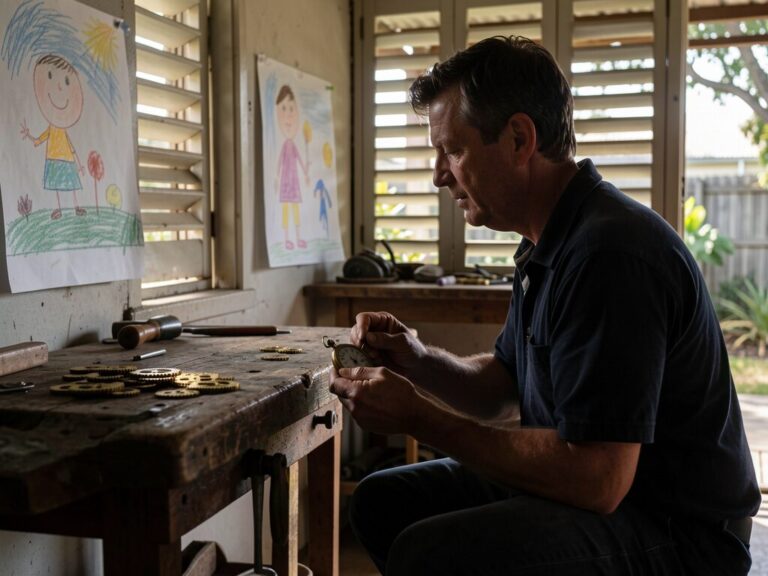
He was a maritime archaeologist, which meant he spent most of his time thinking about things that had been deliberately sunk or abandoned. Shipwrecks, mostly. The remnants of voyages that no longer sailed. People assumed his work was romantic, the discovery, the recovery, the restoration. It was not. It was paper trails and grant applications and long hours staring at sonar images that looked like bruises on a screen.
But there was one discovery he never mentioned. Not in casual conversation, not to his husband, not even to himself, until recently.
The Sound of a Key in a Lock
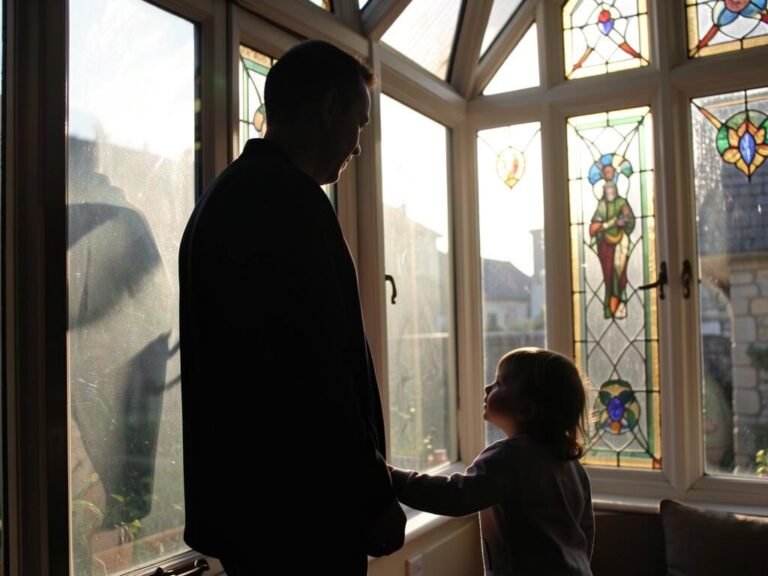
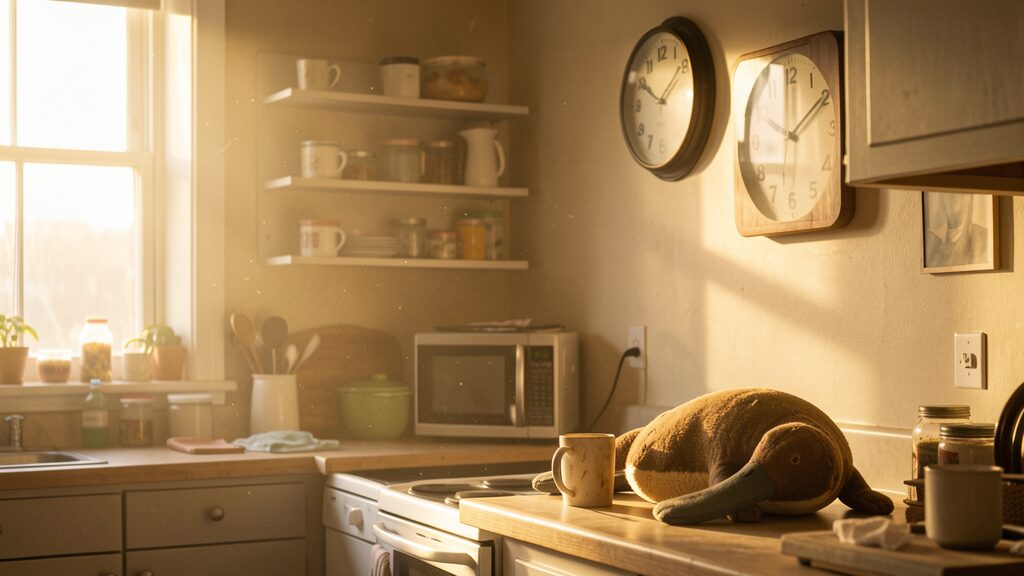
The shift had begun months earlier, in a way so small that Julian almost missed it. He had stopped checking his watch. That was the first sign. For years, his evenings had been governed by a silent, anxious clock: dinner by seven, bath time for his daughter at seven-thirty, a negotiation about screen time, the final story, the door closed, the exhale. He did not resent it. He loved his family. He loved his husband, and he loved their 8-year-old son, Archie, who still fell asleep clutching a stuffed platypus named after a Tasmanian town.
But somewhere between the school pickup and the evening routine, Julian had become a function rather than a person. A collection of roles. Husband. Father. Provider. The names were not wrong, they were just incomplete.
And then, one Tuesday in July, a grant came through. A small one, from a heritage council, to survey a wreck off Bruny Island. It required fieldwork. Weekend fieldwork. The kind of fieldwork that justified a late return, a missed dinner, a new arrangement.
Julian did not lie. He never lied. He simply allowed the truth to become flexible.
The Bookshop and the Invisible
The wreck was not real. Or rather, it was real, a 19th-century whaling vessel, well-documented, precisely located, already surveyed twice. No one needed a new survey. Julian knew this. The grant committee knew this, in the vague way committees know things. What mattered was the paperwork. A name on a form, a signature, an approval. The mechanism of permission.
He spent his fieldwork days not on the water, but in a quiet café near the Hobart Bookshop, where the windows faced the street and the light was grey and generous. He ordered tea. He did not drink it. He watched the door.
The man who arrived was not a man Julian would have invented. That was the strange part. If he had been asked, years ago, to describe the person who might one day make him check his phone first thing in the morning, he would have conjured something dramatic. A sailor, perhaps. An artist. Someone who smelled of salt and spoke in riddles. But the man who walked into that café was an urban planner named Daniel, who wore glasses and carried a reusable container and talked about traffic flow with such genuine enthusiasm that Julian had laughed out loud on their first, accidental meeting.
The Before and the After
Julian had not changed his haircut. He had not bought new clothes. He had not downloaded anything, joined anything, or whispered a single confession into a dark room. The affair was not a performance. It was an erosion, and he was the cliff.
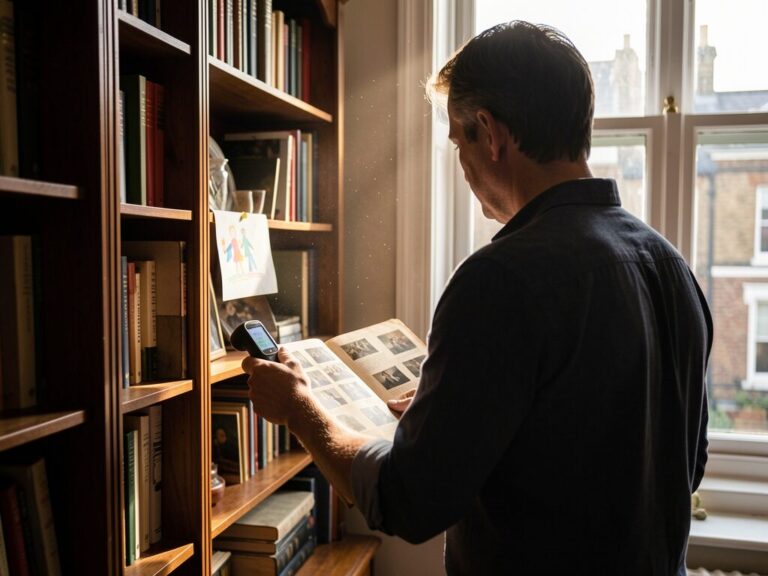
What he noticed, slowly, was the return of attention. He began to notice the way light fell on a tablecloth. He began to taste his coffee. He began, for the first time in years, to read books that were not about shipwrecks. His conversations with Archie grew longer, not shorter, because he was no longer reading them from a script.

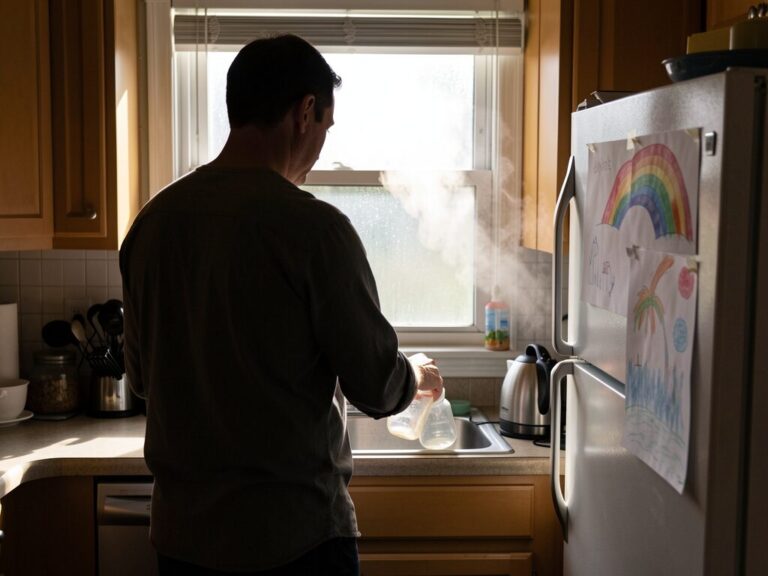
On the surface, everything was the same. He still cooked the same pasta recipe that never came out right, the one with too much garlic and a sauce that split. He still watered the aloe vera plant on the kitchen windowsill, even though it had been dying for two years and refused to accept the fact. He still said “goodnight, see you in the morning” to his husband, Marcus, a high school teacher who snored and left his shoes in the hallway.
But inside the shape of his ordinary life, something had shifted. The hours before he left for a fieldwork day were now thick with anticipation. He shaved more carefully. He chose a different jumper. He looked at himself in the mirror and did not look away.
The Luxury of Being Seen
It was not guilt that Julian felt. That was the surprise. He had expected a weight, a shadow, a constant low hum of apology. Instead, he felt a strange and unsettling lightness. The affair was not a compensation. It was not a rebellion. It was a choice, freely made, without justification, without damage to anyone he loved, or so he told himself. He did not ask for permission. He did not ask for forgiveness.
He was a married gay man in Hobart, and he was no longer invisible.
The word affair suggested something shameful, a secret to be hidden. But the meetings were not secret. They were simply unremarked. Julian did not hide his phone. He did not delete his messages. He left the trail open, not as a confession, but as a test. If Marcus ever looked, what would he find? A plan to meet. A question about the weather. A sentence that ended with “I’ll be there.”
Nothing damning. Nothing burning. Just a small, precise structure of desire, built in the narrow hour between obligation and sleep.
The Shape of Air
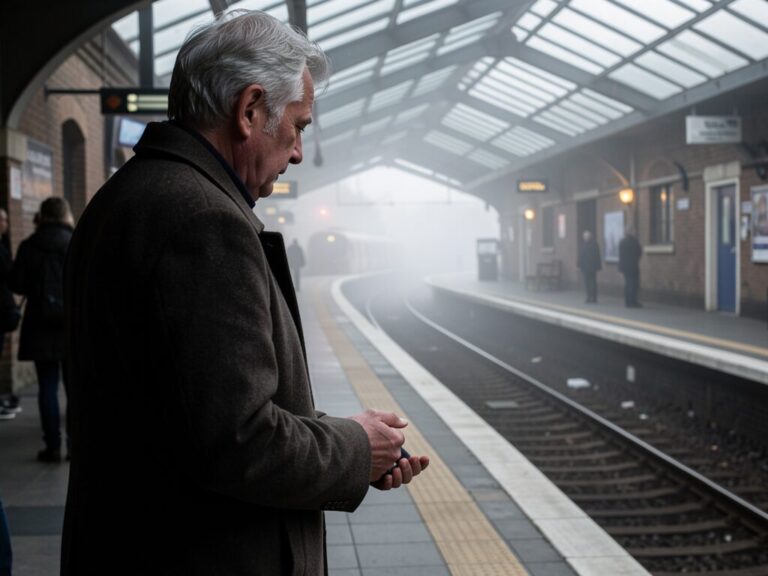
On the day the mountain road closed, Julian stood by the window of the café and watched the snow settle on the foothills. Daniel was late. The traffic. The cold. The city shutting down, slowly, gracefully, the way a stage goes dark between acts.
Julian did not mind waiting. He had become good at it. He had learned that anticipation was not a prelude to pleasure, it was the pleasure. The time before was richer than the time during. The memory of what had not yet happened was already forming, and he held it carefully, like a sonar image of something not yet raised from the sea.
When the door finally opened, and Daniel walked in, breathless and apologizing, Julian did not say it’s fine. He said nothing at all. He just looked at the man in the doorway, and in the space before speech, the world was complete.
Meet discreet married gay men in Hobart
Verified profiles, free registration, real encounters.