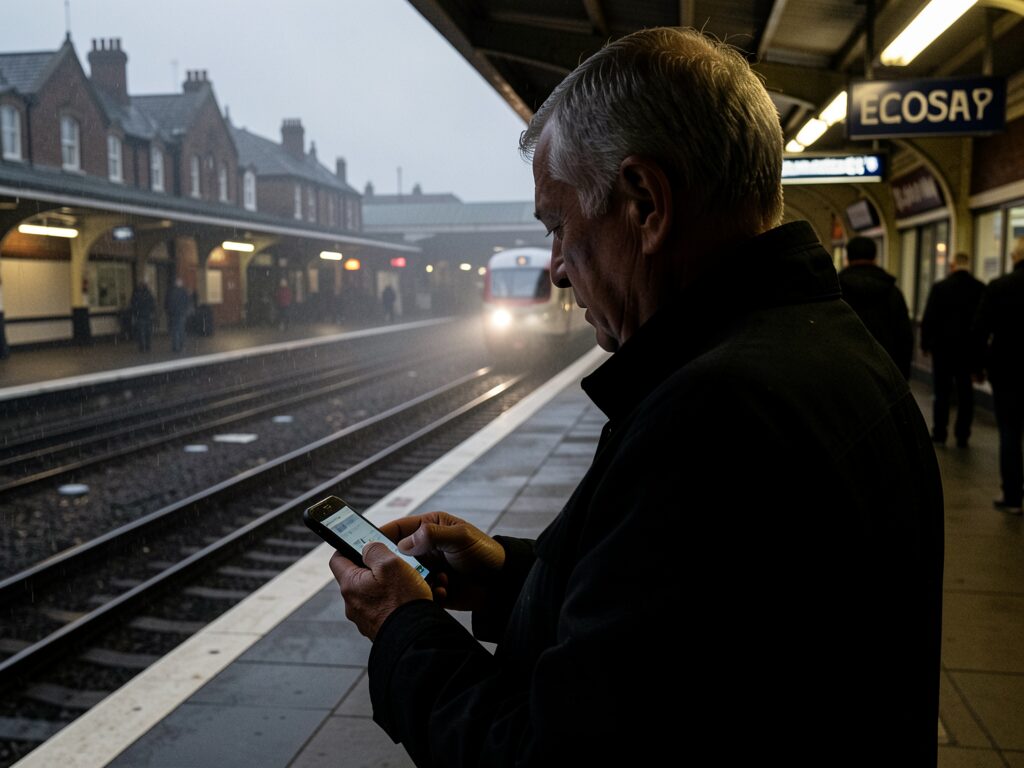
The Man Who Repaired the Past
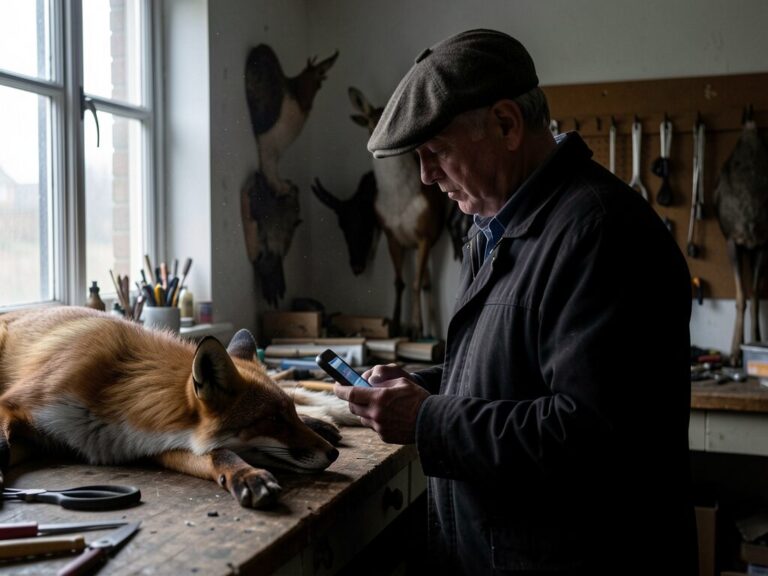
He kept a photograph on his workbench, tucked beneath a magnifying glass he rarely used. The print showed a row of terraced houses in Salford, circa 1892, the faces of the residents blurred into anonymity by time and light. His job was to bring that blur back into focus, to coax the lost details from the paper without tearing its fragile surface. Print restoration, he would explain to anyone who asked, was ninety percent patience and ten percent nerve. He had learned to hold his breath over the smallest decision: a swab of solvent, a nudge of the scalpel. A wrong move and the history was gone forever.
Mark had been doing this work for twenty-three years. He had a small studio on the ground floor of a converted warehouse in the Northern Quarter, where the light came in through tall, grimy windows and the radiators clicked and hissed like disapproving relatives. His clients were universities, auction houses, the occasional private collector who had inherited something they could not quite name. The dead left behind a great deal of paper, and someone had to decide what was worth keeping.
At fifty, he had learned that most things were not.
The Weight of Routine
Home was a semi-detached house in Didsbury, where the hedges were trimmed on a schedule and the bins went out on a Tuesday evening without fail. He had been married for eighteen years to a woman named Rachel, who worked as a clinical psychologist and had a laugh that could fill a room. They had two children: a daughter, fourteen, who had recently discovered existential dread and veganism in equal measure, and a son, eleven, whose primary interest in life was whether the Wi-Fi password had been changed. Mark loved them. He was quite sure of it. But love, he had come to understand, was a thing you could feel without being present for.
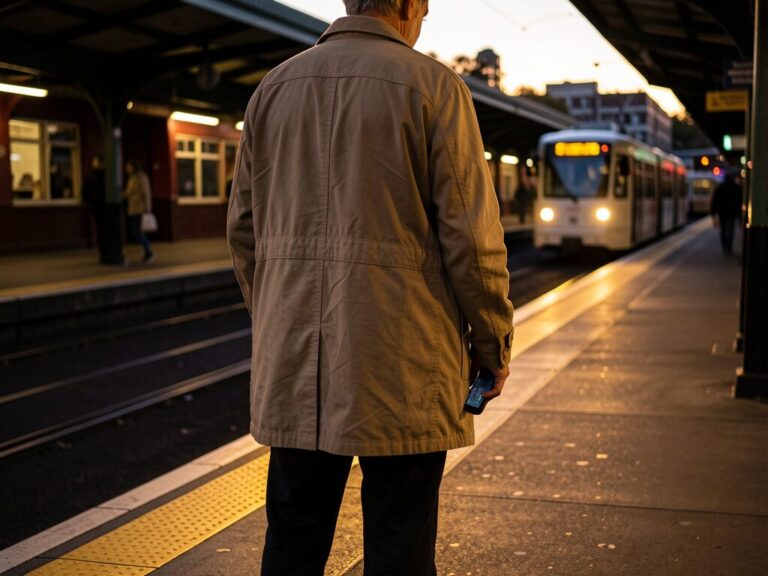
The mornings followed a pattern he could have performed in his sleep. Up at six-fifteen. Shower. Coffee. The radio murmuring something about Manchester United and a midfield signing named Tielemans, the BBC had reported it, though he could not remember the details and did not try. The news was a current that flowed past him, never quite touching his feet. He would kiss Rachel on the cheek, a gesture that had become automatic, like locking the front door or checking he had his keys. He would tell the children to put their phones down. They would not. He would drive to the studio through the grey Manchester drizzle, past the same graffiti, the same bus stop, the man who always stood outside the kebab shop at nine in the morning smoking a cigarette and staring at nothing.
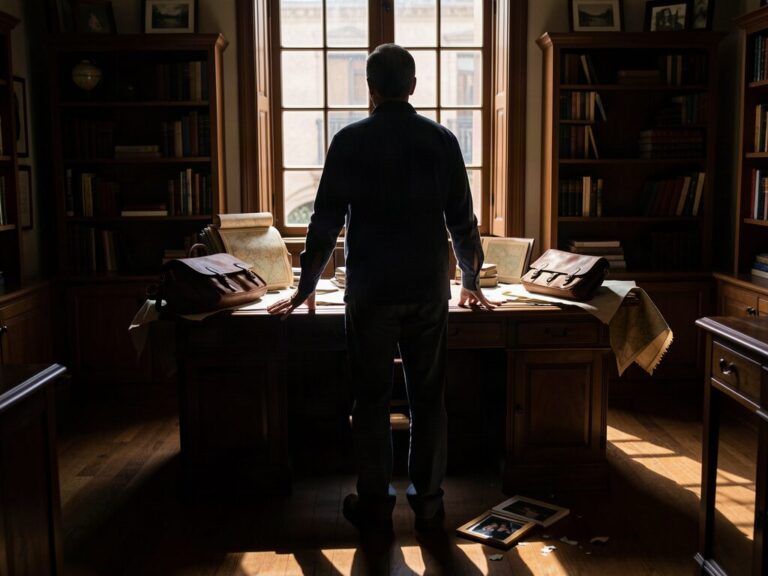
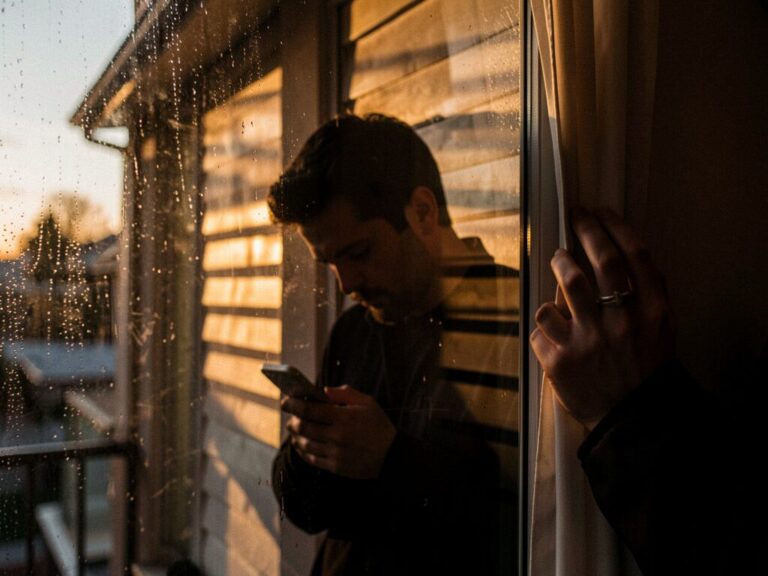
And then he would sit at his workbench, and he would repair the past. It was a good life. It was a quiet life. It was the kind of life that, if you described it to a stranger, they would nod and think: this is a man who has made something stable. They would not see the tremor in his hand as he reached for the phone. They would not notice the pause before he unlocked the screen.
The Divided Photograph
The structure of a secret, Mark had learned, was not unlike the structure of a damaged photograph. Both required you to work around the missing pieces. You did not try to restore the whole image at once. You started with the edges. You built outward from whatever remained intact. You made peace with the fact that some fragments were gone forever, and you did not let yourself wonder who or what had torn them away.
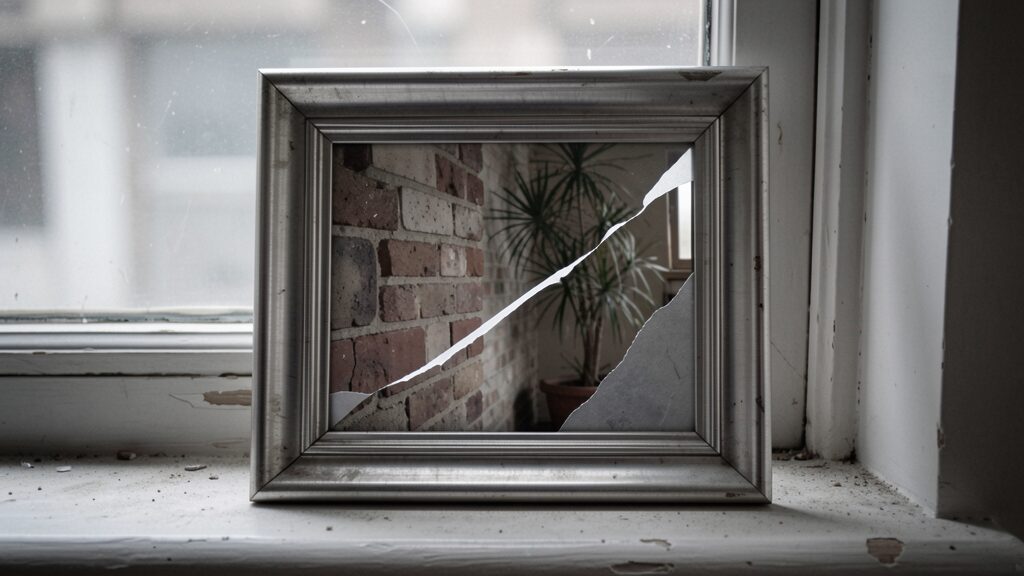
He had a friend, a woman named Neera who ran a framing shop two doors down from his studio. Neera was the kind of person who remembered your birthday and asked about your children with genuine curiosity. She also had a habit of keeping a dying parlour palm in her window, stubbornly refusing to acknowledge that it had turned brown three months ago. Every week, she watered it. Every week, nothing changed. Mark found this oddly comforting. Some things, he thought, you maintained not because they would flourish, but because the act of tending to them was itself the point.
He had never told Neera about the messages. He had never told anyone. That was the architecture of it: a separate room in the mind, soundproofed, windowless, accessible only through a particular combination of keystrokes. He had become expert at the logistics of concealment, the deleted history, the incognito tabs, the careful timing of replies that fell between the school run and the dinner hour. He was meticulous. He was, in his way, a professional.
The photograph on his workbench, the Salford terrace, had belonged to a woman in Prestwich who had found it in her mother’s attic after the funeral. The image was badly faded, creased along the fold lines, spotted with mildew. He had spent a week on it, working in layers, rebuilding the faces of people whose names had been lost. As he worked, he found himself wondering what they had hidden from one another. Everyone, he thought, carried a secret somewhere. The only difference was how well it had been preserved.
The Signal in the Static
It was ITV News that broke the story, and he heard it first on the radio in his studio while he was cleaning a brush. A manhunt underway for a prisoner described as a “high risk to women,” who had escaped during a hospital visit in Prestwich, just north of the city. The newsreader’s voice was calm, controlled, as if discussing the weather. Police had warned the public not to approach him. He was deemed dangerous. He was deemed a risk. And somewhere, Mark thought, a woman was waking up to the knowledge that a man she had trusted had been living a double life.
He did not turn off the radio. He listened to the entire bulletin, the appeals for information, the description of the escapee, the carefully worded statements from the Home Office. And he thought about the word risk. How clinical it sounded. How it stripped a person down to their most threatening outline. You could be a husband, a father, a man who repaired photographs for a living. You could be someone who remembered to buy milk and never forgot a dental appointment. And you could still be, in the quiet moments that no one else witnessed, a danger.
He did not think of himself that way. Of course he didn’t. He thought of himself as a man who had stumbled into something he had not intended, a conversation that had begun as curiosity, a thread pulled loose from the fabric of his ordinary days, and then suddenly the whole garment was unravelling. He had not planned it. He had not chosen it. It had simply happened, the way cracks appear in old paper, slowly, invisibly, until one day you look and the damage is already there.
What he wanted, he could not name. Not a person, exactly. Not even an act. It was the feeling of being chosen. Of being seen not as a husband or a father or a man with a steady profession and a reliable routine, but as something more singular, something that existed outside the frame. He had become invisible in his own life, the way a familiar object in a room stops registering to the eye. And the messages, the quiet words exchanged in the margins of the day, had made him visible again. They had returned him to himself.
The Before and After
There was a moment, every time, before he opened the message. A pause. A held breath. In that pause, he was no longer the man who repaired photographs in a quiet studio, no longer the husband whose kiss had become a reflex, no longer the father whose voice was one among many competing with a screen. He was someone else entirely. He was on the threshold of a door that had not existed five minutes ago. The anticipation was a kind of transformation, a becoming.
And then he would read the words, and the world would snap back into focus, and he would return to his workbench with a steadiness in his hands that had not been there before. He did not smile. He did not sigh. But something in him had shifted, the way a photograph shifts when you hold it to the light and see, for the first time, a detail you had missed.
Before: he had checked his watch constantly, counting the hours until the day ended.
Now: he no longer looked at the watch at all.
He had stumbled, some months ago, on an episode of Esther Perel’s podcast, Where Should We Begin?—the therapist whose name he had seen in a Sunday supplement. He had listened to it in the car, parked outside the studio, not wanting to go inside. A woman was describing an affair. She said: “I didn’t want to leave my husband. I wanted to leave the person I had become.” Mark had sat in the driver’s seat, the engine off, the rain drumming on the roof, and he had felt something crack open in his chest. He had never said those words to anyone. He had barely said them to himself.
But they were true. They were truer than almost anything he had ever admitted.
The Repairs We Cannot Make
He thought about the man who had escaped in Prestwich. What had he been running from? What part of himself had he tried to leave behind? The news reports offered no answers. They gave only the outline: a conviction, a hospital visit, a vanishing. Mark knew that you could not restore a photograph if the paper itself had disintegrated. Some things were beyond the reach of patience and nerve.
He had not been caught. He did not think he would be. The secret was well-preserved, tucked away in the folds of a life that looked, from the outside, complete. But when he looked in the mirror these days, he saw something he had not seen before. Not guilt. Not shame. Just a face, half-lit, as if the photograph had not been fully developed. He was still in progress. He was still a work in need of restoration.
Somewhere in Didsbury, his daughter was scrolling through her phone. His son was asking for the Wi-Fi password. Rachel was reading in the living room, her glasses perched on her nose, a laugh building in her chest at something in a novel. They were waiting for him. They did not know they were waiting.
And Mark, standing in the half-light of his studio, with a brush in his hand and a radio murmuring the news, knew that he would walk back through that front door tonight, and he would kiss his wife on the cheek, and he would ask his children about their day, and the world would continue to spin. The secret would remain sealed. The past would stay repaired.
But he would not look at his watch. Not anymore.
Meet discreet married men in Manchester
Join a discreet and welcoming community.