The Cartography of an Interval
Some places on a map are not meant to be visited. They exist only as blank spaces, cartographic conveniences, places where the surveyor’s pencil simply stopped. In the language of my profession, we call them gaps. I have spent twenty-two years mapping food deserts for the City of Ottawa, documenting where fresh produce withers and convenience stores thrive, my index finger tracing the Ottawa River Parkway on a screen while my mind wanders elsewhere.
The irony is not lost on me: I have become an expert in absence.
The Known World
My husband Philippe is a good man. He is a pediatric dentist with steady hands and a quieter disposition that I once found soothing. We have been married for twenty-two years. Our daughter Élise is seventeen, a competitive swimmer who smells faintly of chlorine and ambition. Our son Hugo is fourteen, already taller than me, already retreating into the territory of adolescence where parents are merely background noise.
We live in a century-old house in Old Ottawa South, the kind with creaking floorboards and radiators that clank like ghostly applause. On Sunday mornings, Philippe makes crêpes. On Tuesday evenings, I attend the board meetings of the local community association. We are, by every external measure, a functioning unit.
But a map is a lie. Every cartographer knows this. A map distorts, simplifies, omits. It flattens a living, breathing territory into a set of lines and symbols. What it cannot show: the temperature of a room at 4:17 PM, the specific weight of a silence that has calcified over years, the way a woman can stand at her kitchen window watching her husband trim the cedar hedge and feel nothing at all except a mild curiosity about what it might feel like to be elsewhere.
According to the CBC News Ottawa report, the city council recently blasted an unannounced, belated Canada Day fireworks show that lit up the sky over LeBreton Flats without warning. Residents complained about the noise, the confusion, the sheer flagrant lack of coordination. I understood that impulse perfectly: the need to detonate something beautiful without asking permission first.
The Unannounced Event
His name is something I will not write here. That is not shyness or guilt; it is a measure of protection for a space that belongs only to us. Let me say only that he is an urban forester, a man who reads the rings of trees the way I read demographic data. We met at a zoning committee meeting eleven months ago, debating the placement of a community garden on a brownfield site in Hintonburg. He argued for native species. I argued for accessibility metrics. Afterwards, we shared a coffee at the Ministry of Coffee on Wellington Street West, and I noticed the way he held his cup, with both hands, as if warming himself at a small fire.
The first time we met outside of professional context, I told myself it was research. He had data on soil contamination I needed. That was true. It was also a lie. I knew it was a lie the moment I stepped into the Art House Café on Somerset, where the afternoon light fell in trapezoids on the painted floor, and I felt my own heartbeat as a foreign object, a living thing I had misplaced years ago.
We did not touch. Not that day. But we talked for three hours, and when I left, I walked home along the Rideau Canal, past the dormant locks, past the benches where lovers sit in warmer months, and I realized I had not checked my phone once. I had not looked at the time. I had not been the mother, the wife, the project manager. I had been a woman having a conversation.
That is the thing about being unfaithful. It is rarely about the body. It is about the attention. It is about being seen when you have become invisible in your own life. The unfaithful wife in Ottawa is not a particular kind of woman; she is any woman who has stopped recognizing herself in the mirror of her own kitchen. She is a woman who suddenly notices the weight of her watch on her wrist, the way it marks time that belongs to everyone but her.
The Sensory Map
We do not meet often. Every eight to twelve days, depending on schedules, on cover stories, on the unpredictability of teenagers and work deadlines. The waiting is the real experience. The encounter is almost an afterthought.
In the days between, I become attuned to the city in a way I never was before. The smell of rain on asphalt near the Pretoria Bridge. The sound of a Blue Heron taking flight over the Rideau River at dawn, a sound like wet canvas snapping. The specific texture of the wooden bench at the back of the Tulip Festival grounds in May, where I once sat for forty minutes before he arrived, counting the cracks in the paint, my palms sweating into the grain of the wood.
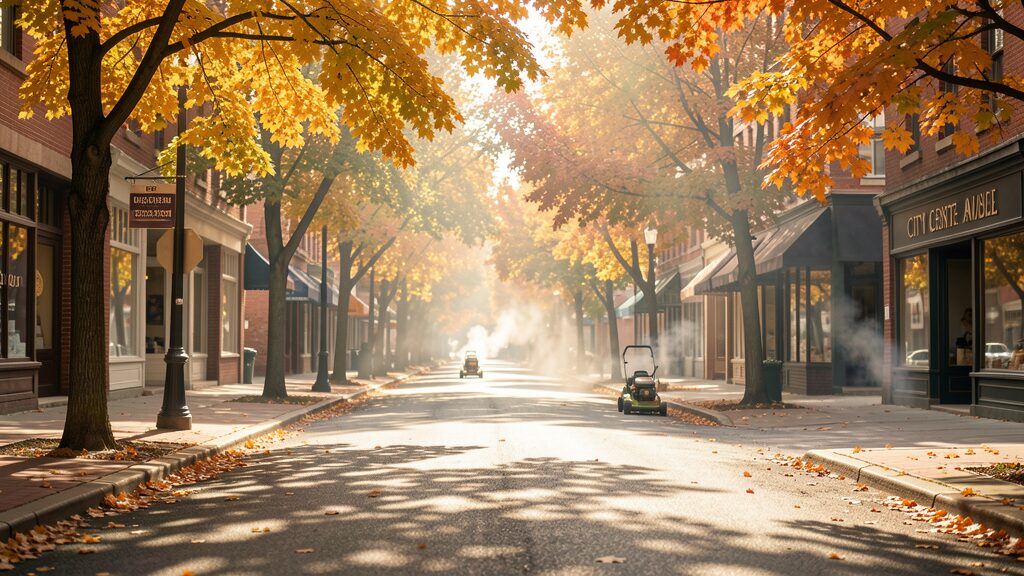
I notice things now. The way the light filters through the leaves of a sugar maple on Elgin Street at 6:23 PM in late September. The scent of diesel and fresh bread from the Art-Is-In Bakery on City Centre Avenue. The hum of a distant lawnmower on a Thursday afternoon when I am supposed to be reviewing a grant proposal but am instead tracing the route to our meeting place on Google Maps, zooming in, zooming out, as if the image could tell me something about what will happen.
The anticipation is its own geography. It has a feel, a sound, a taste. The metallic tang of adrenaline under my tongue during the twenty-minute drive to the small park off the Ottawa River Pathway. The click of the car door, louder than it should be. The gravel crunching under my boots as I walk toward the bench where he is already sitting, his back to me, the curve of his shoulders familiar now in a way that Philippe’s shoulders no longer are.
And then the moment of recognition: the slight turn of his head, the wordless acknowledgment. The knowledge that I am not invisible here. I am not a function. I am not a mother or a wife or a project manager or a forty-nine-year-old woman whose biological clock has become a source of polite medical concern. I am simply someone who was waited for.
The Territory Between Us
I have never told anyone about this. Not my sister, not my closest friend from university, not my colleague who shares an office and a microwave with me. Some things are too fragile for language. They exist in the space between what you say and what you mean, like the uncharted territories on a 17th-century map where cartographers wrote Hic sunt dracones—here be dragons.
There is a childhood memory I return to sometimes. When I was seven, my father took me to see the giant tortoises at the Galápagos Islands. It was a work trip; he was a marine biologist, and I was a quiet girl with pigtails and a notebook. I remember the tortoises more than anything else: their slow, deliberate movements, their ancient faces, the way they carried their entire history on their backs. I remember thinking: this is what patience looks like. This is what it means to endure.
I did not know then that I would become someone who endures. That I would spend years calibrating my life to the needs of others, reducing myself to a set of functions, a checklist, a reliable presence in the margins of other people’s stories.
The affair is not a rebellion. It is not a midlife crisis. It is not a cry for help. It is a quiet, deliberate act of cartography: I am mapping a territory that belongs only to me. I am drawing lines in the sand of my own life, claiming space where I had forgotten space could exist.
The Uncharted Future
Last week, I walked alone through the Ottawa Art Gallery after a meeting that ended early. I stood in front of a large abstract painting, swaths of ochre and deep blue, overlapping, bleeding into each other. The docent told me the artist had been working on it for three years, layering and scraping back, layering and scraping back. She said the painting was about the impossibility of knowing a person completely.
I thought of Philippe. I thought of our daughter’s swim meets, the way he claps at the exact same tempo every time, a metronome of paternal pride. I thought of our son’s long silences at the dinner table, the way Philippe fills them with gentle questions that Hugo deflects with monosyllables. I thought of the Sunday crêpes, the boarded-up windows of winter, the summer trips to a cottage on Lac Philippe where the loons call across the water at dusk.
I do not know what will happen. I do not know if I am the kind of person who can sustain a secret indefinitely, or if I am the kind of person who will eventually, inevitably, hollow it out. The unfaithful wife in Ottawa is not a fixed identity. She is a temporary state, a map still being drawn, a territory that may or may not hold.
But for now, I am learning to read the world differently. To pay attention to the smell of a room when I enter it. To feel the weight of my own body in a chair, aware of my own presence, my own claim on space. To look at the man who is not my husband and see, not an escape, but a mirror, one that reflects a version of myself I had forgotten existed.
The unannounced fireworks over LeBreton Flats lit up the sky for seven minutes before anyone knew what was happening. Some people were angry. Some were confused. But some, I imagine, stood at their windows and felt a strange, unexpected thrill. A beautiful thing, arriving without permission. A breach of protocol. A moment of unplanned radiance.
I understand them better than I would like to admit.
Tomorrow I will attend a zoning committee meeting. I will sit next to Philippe at dinner. I will help Élise with her university applications and drive Hugo to his piano lesson. I will be, once again, the woman in the known world.
But I will also be the woman who knows there is another map.
And I am the one holding it.
Meet discreet married women in Ottawa
Sign up for free and start a new story.