The 5:48 to LoDo: On Being the Other Woman in a City That Knows How to Keep Secrets
The text came at 5:48 PM on a Tuesday, during the part of the afternoon when Denver’s light turns the color of unripe apricots and the Front Range seems close enough to touch.
Same place. Same time.
Three sentences. No emoji. No question mark. No negotiation.
Cora read it while standing in the produce aisle of the King Soopers on Speer Boulevard, a bag of limes in one hand and her phone in the other. She did not smile. She did not look around to see if anyone had noticed. She simply locked the phone, placed it face-down in her basket, and continued selecting avocados with the same precision she used for everything else.
This is the thing about being the other woman in Denver: you learn to read a body of water by its surface. You learn when to hold your breath and when to let the current carry you.
The Geography of a Secret
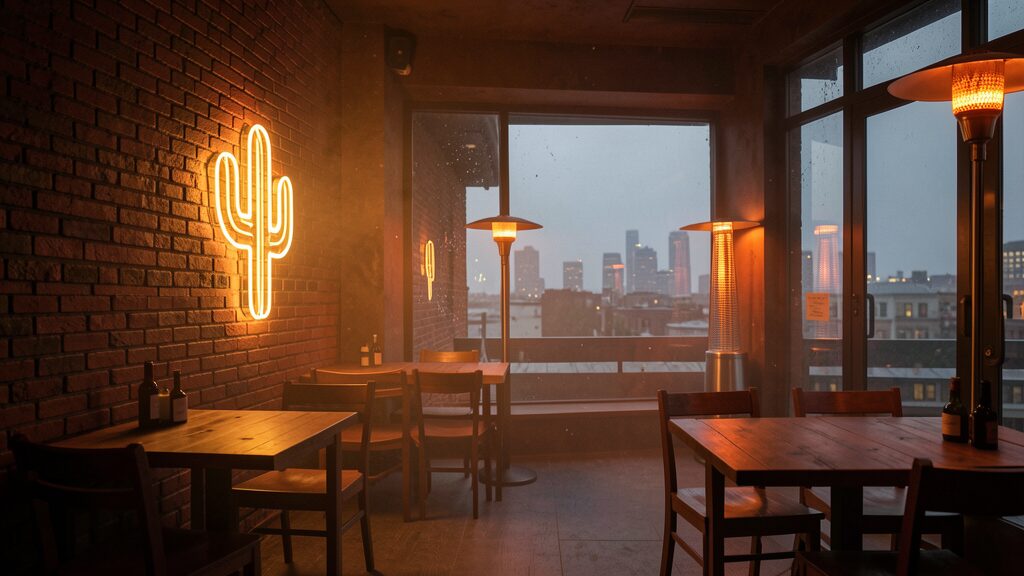
Denver is a city of grids, numbered streets, lettered avenues, blocks that make perfect rectangles on a map. But every grid has its folds, its small pockets of shadow where things are allowed to exist without explanation. Cora has lived here long enough to know them all: the bar on South Broadway with no sign and a single neon cactus in the window, the rooftop of the redbrick building on Wazee where you can see the mountains but no one can see you, the bench at the confluence of the South Platte and Cherry Creek where the sound of water covers everything.
Her life is not a tragedy. This is the first thing she would tell you if you asked. She is thirty-three years old, a lighting designer for a contemporary dance company, and she has been in a relationship for seven years with a man who edits documentary films from their shared loft in the Golden Triangle. He is kind, absent for weeks at a time during post-production, and deeply unaware that Cora has been spending certain Tuesday evenings with someone else for the past fourteen months.
She does not feel guilt. This is not because she is cold or cruel, but because the affair exists in a room of her life that is separate from every other room. When she is with him, the other man, the married man, the man whose name she never says aloud in her own apartment, she is not Cora the partner, Cora the professional, Cora the woman who forgets to water her basil plant for the fourth time and finds it yellowing on the windowsill like a small, leafy accusation. She is simply the woman he crosses a city to see.
The Mathematics of Being Chosen
According to a 2023 Pew Research Center survey on relationships and technology, roughly one in five adults in committed relationships report having kept a significant secret from their partner. The study did not ask about affairs directly, it measured “private digital behaviors,” “hidden communications,” “unshared emotional connections”—but Cora read the report when it came out and recognized the architecture.
Secrecy has its own grammar. The way you learn to delete the right messages but keep the wrong ones. The way you develop a sixth sense for the sound of a key in the lock. The way you stop telling your partner where you are going because the lie has become too heavy to carry and the truth would be heavier.
But Cora has never lied directly. This is her private rule. She does not say she is working late when she is meeting him. She simply does not say she is meeting him. She lets the evening fold around her like a garment she can step out of and back into without a single stitch pulling loose.
The power of being chosen is not about being better than his wife. Cora has never met his wife. She knows her only through the details that slip out in conversation: she is a pediatric occupational therapist who runs half-marathons and can name every tree in Washington Park. Cora does not compete with her. She does not compete with anyone. The affair is not a contest. It is a parallel universe, a dimension she enters through a door only two people know exists.
The Temperature of a Tuesday
Denver in July is a city of sudden heat and sudden rain. The afternoon of the text, a storm had swept through from the foothills, snapping umbrellas and flooding the intersection of Colfax and York. Cora had watched it from her studio window, the dancers finishing their rehearsal to the sound of thunder, the light shifting from gold to green to a bruised purple. By the time she left, the streets were steaming.
The Denver Post reported that same day that Water World had been evacuated after a security threat, the park emptying its 4,000 visitors onto 88th Avenue in a slow, bewildered parade of wet swimsuits and dripping hair. By evening, police had declared the threat “not credible,” and the park announced it would reopen Sunday. Cora read the article on her phone while waiting for the 5:48, the light rail she takes from the 10th & Osage station to LoDo, the line she knows by heart.
She does not think of herself as a mistress. The word carries too much historical weight, too many perfumed novels and tragic operas. In Denver, in 2026, she is simply a woman who has chosen something that does not fit neatly into the categories available. There is no census box for “woman in a seven-year relationship who meets a married man for drinks on Tuesdays.” There is no tax form for the hour she spends with her head against his chest in the back corner of a wine bar on Larimer Street, counting his heartbeats like a rosary.
The Before and After of a Glance
Here is a small thing: Cora used to wear a watch. A vintage Seiko her grandmother left her, with a face the color of old bone. She stopped wearing it six months ago, not because she didn’t want to know the time, but because she found herself checking it too often, counting the minutes until the next Tuesday, the hours until he would text, the seconds until she could stop pretending that every day mattered equally.
Now she keeps time by other measures: the angle of the sun on the mountains, the ring of her phone in a specific pattern, the way her own reflection looks in the dark window of a light rail car as it crosses the river. She catches herself in that glass sometimes and does not recognize the woman staring back, not because she looks different, but because she is different. The woman in the glass is waiting. The woman in the glass is wanted.
Before the affair, Cora had not registered what it felt like to be invisible. She was not unhappy. She was simply seen in a way that had become habitual, like wallpaper you stop noticing after two years. Her partner loved her, she believes this, but he loved her the way people love furniture they have owned for a long time: with comfort, with familiarity, without the sharp recognition of a first glance.
The affair did not teach her that she was unhappy. It taught her that happiness was not the point.
The Secret Architecture of Attention

A 2022 study from the University of Denver’s Center for Marital and Family Studies (one of the few academic centers in the country that examines intimacy with something like clinical rigor) suggested that the quality of attention in a relationship, what researchers call “emotional presence”—is a stronger predictor of commitment than shared values, financial stability, or even sexual satisfaction.
Cora read that study too. She reads everything. It is one of the things he likes about her, the way she remembers details, the way she can talk about anything from moss biology to antitrust law to the choreography of Pina Bausch. He had said this once, early on, in the voice men use when they are still pretending they are not about to fall: You notice things. Most people don’t.
She noticed him noticing her. She noticed the way he held the door for the barista. She noticed the way he never looked at his phone when she was speaking. She noticed the way he remembered, three weeks later, that she had mentioned her basil plant was dying, and brought her a cutting from his own windowsill.
The plant perished anyway. Cora cannot keep anything alive that requires regular attention. She can design a lighting plot for a six-dancer piece in a black box theater, but she cannot remember to water a single herb. He found this funny. He said it made her human.
He does not know that she kills every plant she touches. He does not know that her favorite playlist is a single song looped for three hours. He does not know that she says “I know” instead of “thank you” because she was raised by a mother who considered gratitude a form of weakness. These are not secrets she keeps from him deliberately. They are simply the corners of her life that have not yet been illuminated.
The Luxury of Not Explaining
Cora is aware that the word “mistress” carries a weight she does not feel. In the cultural imagination, the mistress is either a villain or a victim, a woman who steals or a woman who suffers. She is neither. She has not stolen anything because no one owns him. She is not suffering because she chose this.
She chose it the way you choose a specific hotel room in a city you love: not because the room is better than your own house, but because you are not your own self in it. You are a traveler. You are a person with no dishes to wash, no mail to sort, no basil plant to mourn.
The affair is not an escape from her life. It is an addition to it, like a room in a house you did not know existed until someone unlocked the door. She does not want his life. She does not want to be his wife, his partner, his next chapter. She wants only what she has: the Tuesday evenings, the text at 5:48, the feeling of being seen by someone who still remembers what it costs to pay attention.
Denver is full of people who keep small secrets. The man who drinks alone at the bar and never speaks. The woman who walks her dog at midnight in the same loop, every night, as if tracing the perimeter of something she cannot name. The city itself keeps secrets, the tunnels beneath the Capitol, the uranium mine sealed under a parking lot in Golden, the ghost of Elitch Gardens that still haunts the air above the new apartment buildings on 38th.
Cora’s secret is not dramatic. It is not tragic. It is simply hers.
The Evening Takes Shape
She gets off the light rail at Union Station and walks west, past the converted warehouses and the restaurants with their patio heaters glowing orange against the twilight. The air smells of grilled meat and river water and the particular dust of a city that sits at altitude. She does not hurry.
He is already there when she arrives, the wine bar with no sign, the one with the single neon cactus. He stands when she enters. It is an old-fashioned gesture, almost theatrical, and it makes her smile every time.
She sits down. He pushes a glass of Sancerre toward her. The condensation has already begun to bead on the glass.
“Did you see the news about Water World?” she asks.
He shakes his head. “I was in meetings all afternoon.”
“Four thousand people evacuated. False alarm.”
“Glad everyone’s safe.”
“Mm.”
They sit in the kind of silence that only exists between people who do not need to fill it. Outside, the sky is doing that thing it does in July, the clouds stacked like white boulders against a deepening blue. Inside, Cora lifts her glass and lets the cold seep into her fingers.
She does not check her phone. She does not look at the clock on the wall. The time does not matter. The time is already theirs.
She has never told him about the basil plant. She has never told him about the Seiko watch in her jewelry box, or the playlist, or the way her mother says I raised you better than this in a voice that still reaches her across six hundred miles. She has not told him because she does not need to. The affair exists in a space where explanation is unnecessary. It is a room with no furniture, no history, no future. Just two people and a glass of wine and the particular relief of being chosen for nothing more than the shape of your attention.
Denver is a city of grids, but Cora has learned to live in the spaces between the lines. She has learned that a secret can feel less like a weight and more like a door. She has learned that being the other woman is not a role she plays but a room she enters, and that the door opens only when she decides it does.
The neon cactus flickers once. The wine is cold. The evening stretches out before her like a street she has never walked down, and she is not afraid of where it leads.
Find a mistress in Denver
Verified profiles, free registration, real encounters.